
We are looking for MSc students to join our group for their theses starting spring 2026. Please get in touch if you are interested in joining us. The following projects give you an insight into what we are working on. They are designed as full MSc projects but can be adapted to SIE semester projects. It is possible that we have other topics not listed here- feel free to reach out!
Context:
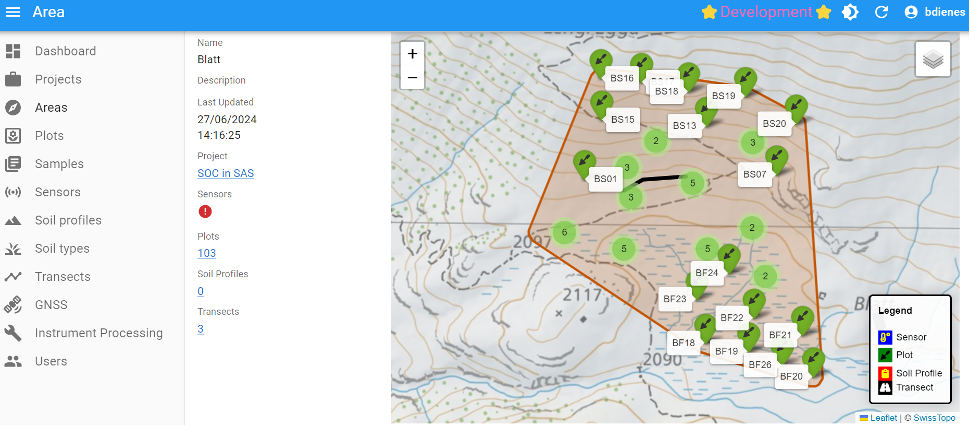
In field ecology, visualising georeferenced data has great potential to improve our understanding of ecological processes such as soil organic carbon mineralisation. To this end, together with our software engineer we have conceptualised and developed a web application to present field and experimental data from two study sites in the Swiss Alps. The application enables the import, export and visualisation of diverse datasets using built-in plotting tools and is intended to be made publicly accessible.
This MSc thesis offers a unique opportunity to enhance the functionality and usability of this application and to develop it further into an interactive tool for sharing science with a broad audience.
Objectives:
- Become familiar with the datasets feeding the web application and seek improvements
- Improve and create new built-in visualisation and mapping tools such as interactive maps and plots.
- Create an interactive user interface for a broad public display, based on the data collected by scientists in our group.
Knowledge and skills required:
- Knowledge in React, Javascript is important
- Experience in mapping and plotting libraries (Plotly and Leaflet preferred)
- Good organization skills.
- Interest in field ecology is a plus.
Workplace: ALPOLE (Sion)
Contact: For further information, check out our project on Mechanisms of soil organic carbon stabilization in mountain soils and contact Bence Dienes for details.

Context:
Manganese oxides are naturally occurring minerals that function as electron sinks or sources. Through their interactions with microorganisms, soil organic carbon, and environmental pollutants, these minerals act as potential drivers of soil chemistry. Additionally, they exist in multiple oxidation states—transitioning between Mn(II), Mn(III), and Mn(IV)—which allows them to function as effective redox buffers. In this project, we specifically focus on Mn(III)-oxides (hausmannite and manganite) due to their dual capacity to act as electron acceptor and donor. We use mediated electrochemical analyses (MEA) techniques to probe how these minerals behave in the environment. Specifically, we aim to determine key redox parameters for these minerals to predict how their reactivity changes as a function of (i) thermodynamic driving force and (ii) solution chemistry.
Objectives:
- Characterize redox parameters via MEA: Perform mediated electrochemical experiments on Mn(III)-oxides to determine thermodynamic and kinetic parameters that predict mineral reactivity relative as a function of thermodynamic driving force.
- Quantify solution chemistry effects: Evaluate the influence of environmental variables by quantifying the effects of carbonate, organic matter, and specific ligands on the reactivity and electron transfer rates of Mn(III)-oxides.
Knowledge and Skills Required:
- General interest in chemistry and environmental processes
- Some prior experience in a wet laboratory (does not have to be extensive)
- Proficiency in English
- Willingness to participate in scientific writing process
Learning Outcomes:
- Fundamental and applied knowledge in electrochemistry and redox chemistry
- Hands-on experience with electrochemical instrumentation and anaerobic chambers
- Experience in scientific data analysis and writing
Working place: ALPOLE-EPFL, 1950 Sion, Valais
Contact: For further information contact Vineeth Pothanamkandathil or Meret Aeppli.
Context:
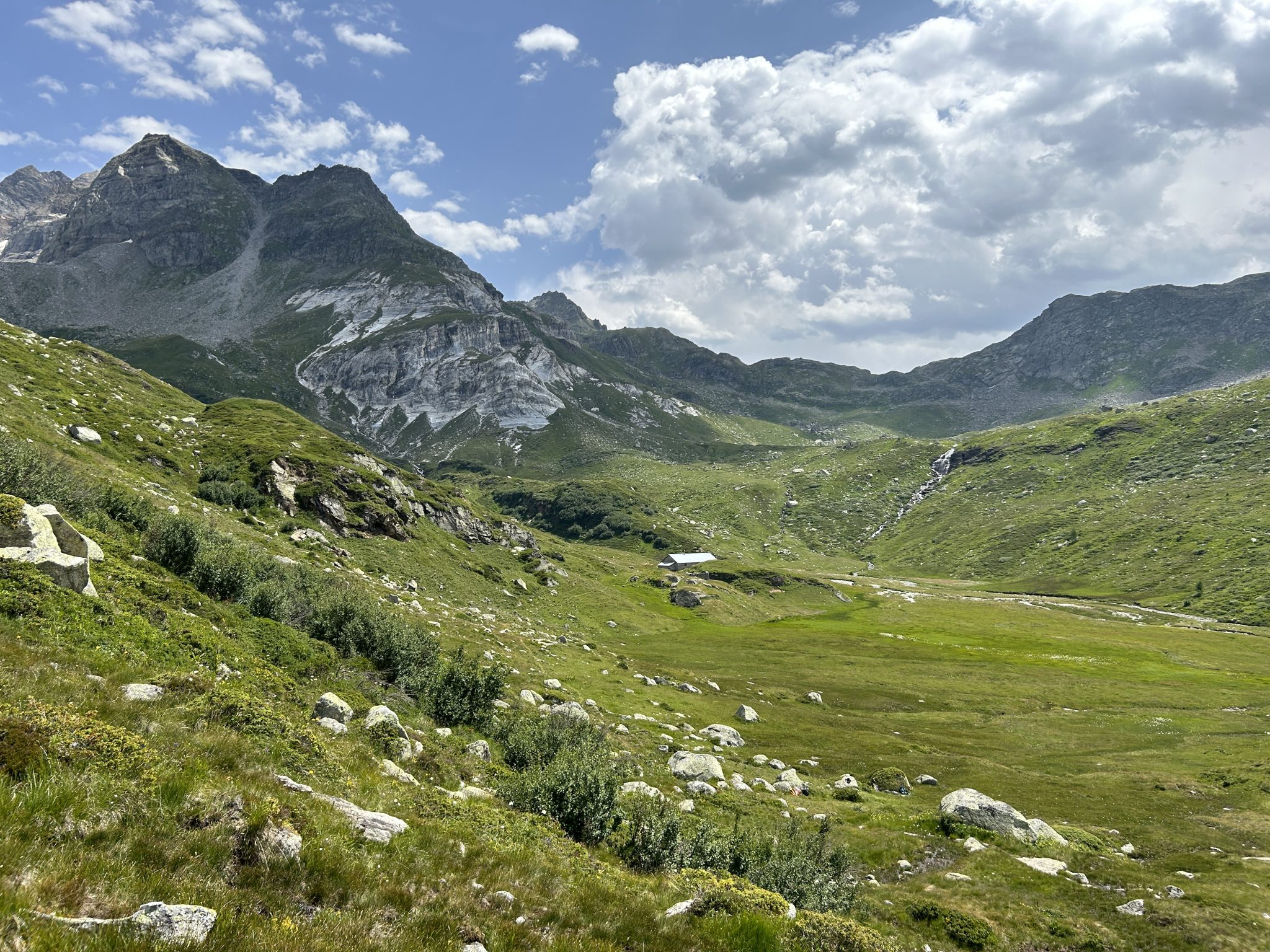
Soil organic carbon (SOC) is the largest terrestrial carbon reservoir, closely linked to atmospheric CO₂ through gas exchanges, making it crucial for climate mitigation. In alpine environments, where trees are absent and degradation rates are slow, SOC stores the majority of ecosystem carbon. However, it is unclear how environmental conditions, such as moisture, influence the mineralisation of SOC in alpine environments. Understanding the turnover dynamics of SOC is key to predicting the effects of climate change on these vital carbon reservoirs. This MSc project aims to assess the influence of soil moisture on SOC mineralisation in Swiss Alpine soils under controlled laboratory conditions.
Objectives:
- Set up and run soil incubation experiments under different moisture conditions and characterize the soil before and after the incubation.
- Measure several parameters such as soil respiration, moisture, redox conditions, oxygen availability during the course of the incubation.
- Conduct statistical analysis to evaluate the relationship between soil respiration, soil properties, and environmental conditions.
Knowledge and skills required:
- Broad interest in soil biogeochemistry.
- Good organization skills.
- Meticulous in laboratory practices.
- Reasonable proficiency with written English.
- Willingness to participate in the scientific publication process is a plus.
Workplace: ALPOLE (Sion), some punctual analysis might take place in Geopolis (UNIL)
Contact: For further information, check out our project on Mechanisms of soil organic carbon stabilization in mountain soils and contact Bence Dienes for details.
Context:
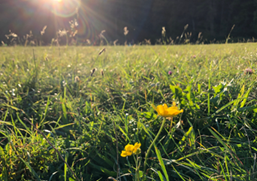
Agricultural systems are under pressure to produce increasing amounts of food for a growing human population while preserving, and ideally enhancing, the capacity of soils to sequester carbon and provide a habitat for biodiversity. To address these challenges, Nestlé in collaboration with SOIL is supporting regenerative agricultural practices. One such practice is the application of non-harmful, cheap organic fertilizers in combination with additives. These combinations of fertilizers and additives have shown promise in laboratory studies, but it remains unknown if these positive effects manifest themselves when fertilizers plus additives are applied under real-world conditions on agricultural farms. This MSc thesis aims to evaluate the effects of organic fertilizers combined with additives on two different farms in Switzerland. The study will involve both fieldwork and laboratory analyses.
Goals:
The objectives of this thesis are to:
- Conduct greenhouse gas (GHG) measurements from soils on two Swiss farms.
- Collect and analyze soil samples from both farms, characterizing key properties such as texture, elemental composition, pH, and X-ray fluorescence (XRF).
- Assess the impact of organic fertilizers and additives on GHG emissions and soil properties, comparing the results with existing data from previous studies.
Workplace: ALPOLE (Sion)
For more information, explore our project on Impact of chemical additives on soil health and greenhouse gas fluxes.