
3D-Printed Porous Hydroxyapatite Formed via Enzymatic Mineralization
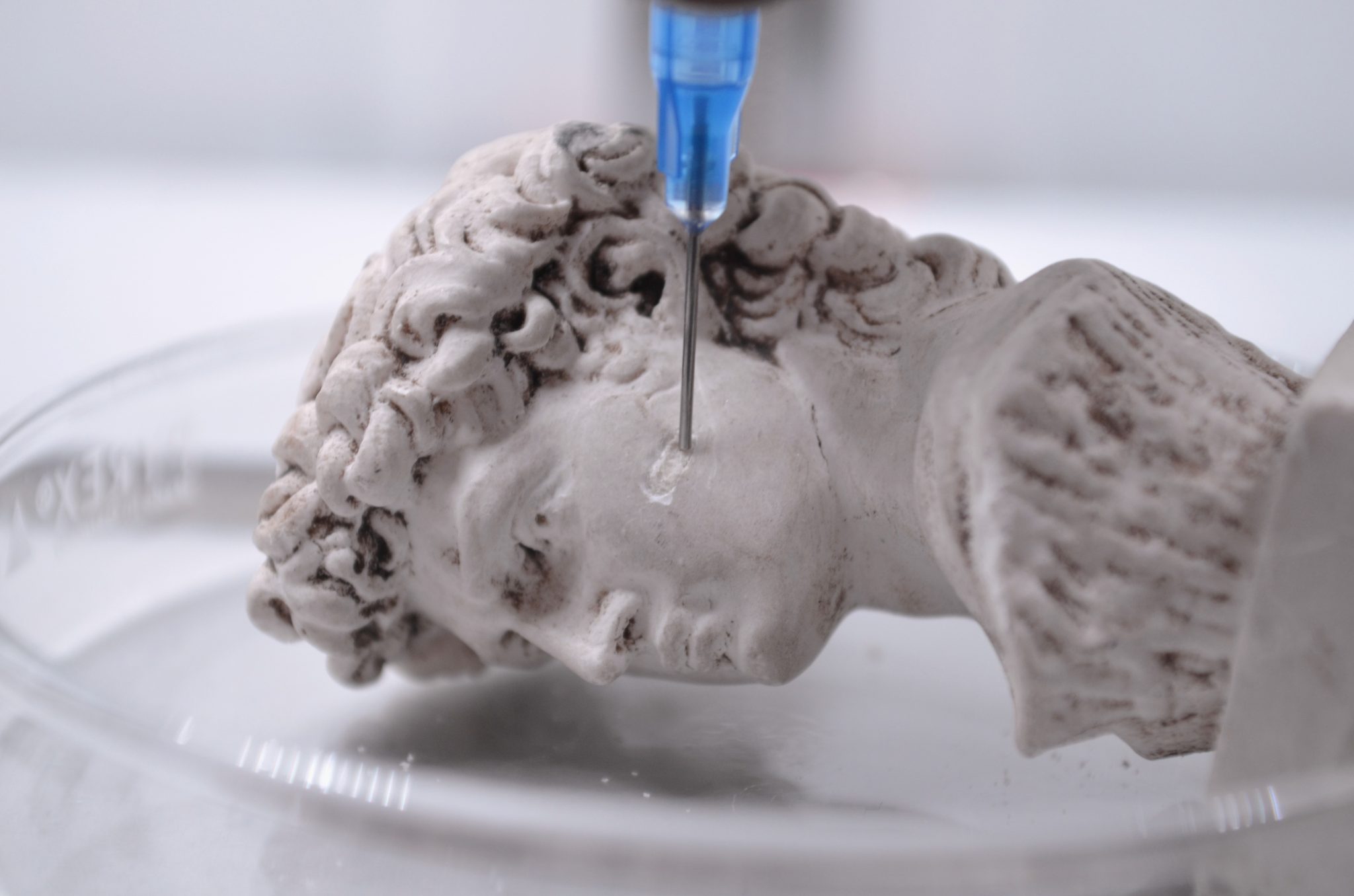
This study presents a new way to make bone-like materials that are strong, porous, and biologically compatible without relying on the high-temperature processing usually required for ceramic implants. Inspired by how bone forms in nature, we introduced a 3D-printable granular ink made from naturally-derived hydrogel fragments containing the enzyme alkaline phosphatase that are connected through Ca2+ crosslinked alginate. After printing at room temperature, the structures are placed in a mild aqueous solution, where the enzyme triggers the formation of hydroxyapatite, the main mineral found in bone. This low-energy mineralization process transforms the soft printed scaffold into a load-bearing composite within seven days, while avoiding the sintering steps that normally limit shape complexity and prevent incorporation of sensitive biological components. The porosity of the resulting composite can be tuned by mixing enzyme-containing fragments with enzyme-free ones and can reach volume fractions as high as 52%. The resulting composites combine low density with mechanical properties that are relevant for bone repair. Depending on composition, the scaffolds reach compressive strengths up to 3.7 MPa and specific strengths similar to porous trabecular bone. The pores are connected and large enough for cells to enter and spread throughout the structure. This is important because bone substitutes must do more than simply fill space: they must also provide a three-dimensional environment that supports cell infiltration, tissue growth, and eventual remodeling.
This work was highlighted on the EPFL front page and the NCCR homepage.

Enzyme-Induced Mineralization of Calcium Carbonate in 3D Printable Granular Hydrogels
This work presents a bacteria-free approach to create strong, lightweight, and biocompatible mineral-based materials at room temperature under benign conditions that are potentially compatible with in vivo applications. This is achieved by combining naturally-derived polymers with enzyme-driven mineralization. In this work, we introduce 3D-printable granular inks made from gelatin or algae-derived κ-carrageenan microparticles that have been functionalized with the enzyme urea. Enzyme-loaded microfragments are surrounded by alginate before they are jammed and processed into the desired shape. The structures are solidified through the Ca2+ induced gelation of alginate. Upon incubation of the granular scaffold in a mineralizing solution for up to 4 days, enzyme-containing microfragments are mineralized to result in calcium carbonate-based composites containing up to 92 wt% mineral. Despite being produced through a gentle, energy-efficient process, the resulting dry scaffolds achieve mechanical properties similar to porous bone and support high cell viability, making them promising for tissue engineering and the repair of damaged mineralized materials. More broadly, the study shows how bioinspired processing can turn simple, abundant ingredients into functional structural materials with properties that are difficult to obtain by conventional manufacturing. This work is now published in Advanced Composites and Hybrid Materials.

3D Printing of Living Structural Biocomposites
Inspired by nature, we introduce an energy-efficient process that takes advantage of the compartmentalization to fabricate porous CaCO3-based composites exclusively comprised of nature-derived materials whose compressive strength is similar to that of trabecular bones. To fabricate this unique material, we combine microgel-based granular inks that inherently can be 3D printed with the innate potential of engineered living materials to fabricate bacteria-induced biomineral composites. The resulting biomineral composites possess a porous trabecular structure that comprises up to 93 wt% CaCO3 and thereby can withstand pressures up to 3.5 MPa. This work is currently published in Materials Today, highlighted in this press release, and has been awarded the SCS DPCI PhD Student Award.
Additive Manufacturing of Porous Biominerals
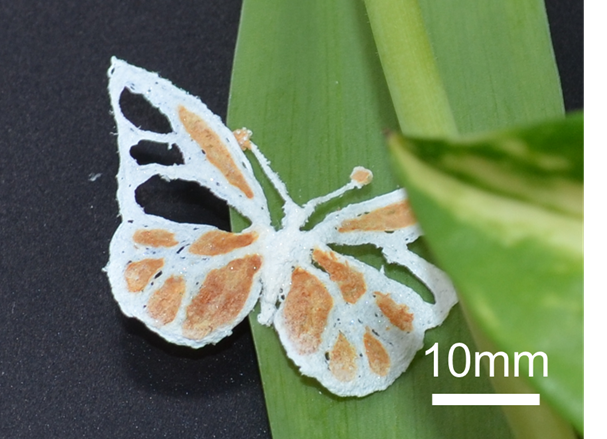
Porous biominerals, such as trabecular bones and echinoderm skeletons, display a fascinating combination of mechanical properties and dexterity. Keys to this outstanding combination of properties are the well-defined structure of the minerals and the organic components over many orders of magnitudes. This work introduces a capsule-based ink that enables 3D printing of cm-sized biominerals possessing pores with diameters that can be controlled from 100 nm up to the mm length scale. This level of control is achieved by reversibly crosslinking pyrogallol-functionalized surfactants with Ca2+ ions at the surface of oil-in-water drops to convert them into viscoelastic capsules. These capsules are dispersed in a poly(vinyl alcohol) (PVA) solution before they are up-concentrated to yield a 3D printable ink. The 3D printed material is rigidified by mineralizing the capsule shells and firmly connecting adjacent capsules through mineral bridges. By tuning the mineralization conditions and porosity of the composite, we can adjust its mechanical properties to be similar to that of natural porous minerals such as human trabecular bones or the beaks of toucan birds. The tight control over the porous structure, mineral composition, and macroscopic 3D shape is achieved through an energy-efficient process that can be performed at room temperature under aqueous conditions. We foresee this process to open up new opportunities for the design of the next generation of strong and lightweight motile mineral-based composites. This work is now published in Advanced Functional Materials.
Reinforcing Hydrogels with In Situ Formed Amorphous CaCO3
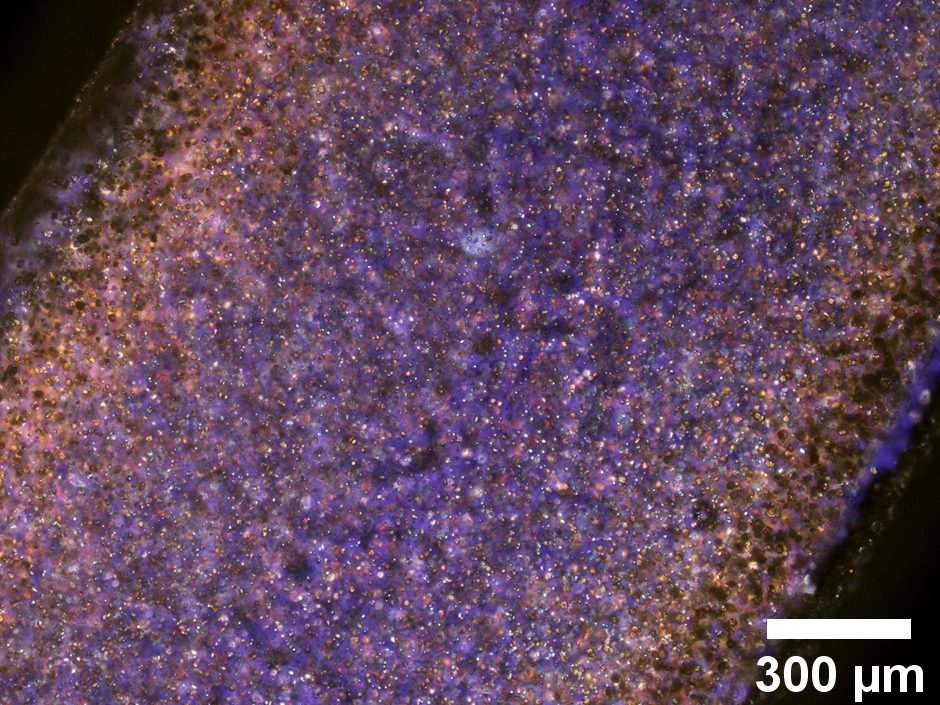
Hydrogels have been gaining increasing attention in the biomedical field due to their good biocompatibility and tunable mechanical properties. However, traditional hydrogels are rarely used for load-bearing applications because of their limited stiffness and/or toughness. By contrast, nature utilizes minerals to reinforce hydrogel-like materials for load-bearing and protection purposes, such as cartilages in joints. Inspired by nature, the stiffness or toughness of synthetic hydrogels has been increased by forming minerals, such as CaCO3, within them. However, the hydrogel reinforcement achieved with CaCO3 remains limited due to the weak affinity between the minerals and the hydrogel matrix. To address this limitation, we form CaCO3 biominerals in situ within a model hydrogel, poly(acrylamide) (PAM), and systematically investigate the influence of the size, structure, and morphology of the reinforcing CaCO3 on the mechanical properties of the resulting hydrogels. We demonstrate that a percolating amorphous calcium carbonate (ACC) nano-structure forms in the presence of a sufficient quantity of Mg2+. This percolating ACC network strongly increases the toughness and stiffness of mineralized hydrogels. The stiffness of the hydrogel can be increased even more, by a factor of 50, when it is functionalized with moieties that have a high affinity to CaCO3, such as acrylic acid (AA). These fundamental insights on the structure-mechanical property relationship of CaCO3-functionalized hydrogels show the potential to tune the mechanical properties of mineralized hydrogels over a much wider range than what is currently possible. This work is now published in Biomaterials Science.
The petrological evolution of Earth’s solidifying magma ocean from experimental melting phase relations
Earth and Planetary Science Letters. 2026. Vol. 690, p. 120159. DOI : 10.1016/j.epsl.2026.120159.Origin of alkali-metal loss in high-temperature synthesis of rechargeable battery layered oxide cathodes
Next Materials. 2026. Vol. 10. DOI : 10.1016/j.nxmate.2026.101587.3D-Printed Porous Hydroxyapatite Formed via Enzymatic Mineralization
Advanced Functional Materials. 2026. DOI : 10.1002/adfm.202526568.3D printing of self-healing longevous multi-sensory e-skin
Communications Materials. 2025. Vol. 6, num. 1. DOI : 10.1038/s43246-025-00839-7.Interlayer structure and hydration energetics of calcium silicate hydrate
2025