Context:
In the context of climate change and the probable decrease in soil water reserves during the summer, grapevines may increasingly be exposed to drought in the future. One of the effects of drought on plants is vascular embolism: the formation of air bubbles in the plant’s water transport system. An increase in tolerance to embolism has been observed in the stems and leaves during the growing season. However, the fruit has not yet been studied in this regard. This raises the question of at what level of drought embolisms develop in the fruit’s xylem, and whether this phenomenon changes after véraison, the time of year when the vine undergoes significant physiological and anatomical changes: the grape berry swells and changes color, turning from green to bright red for black grapes, translucent yellow for white grapes, or pink for grey grapes.
The study and methods:
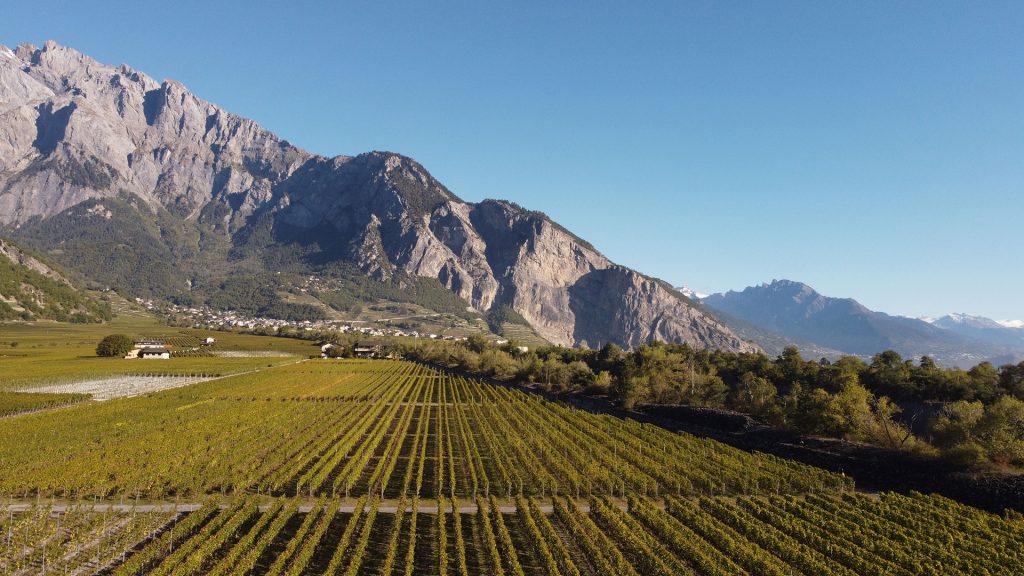
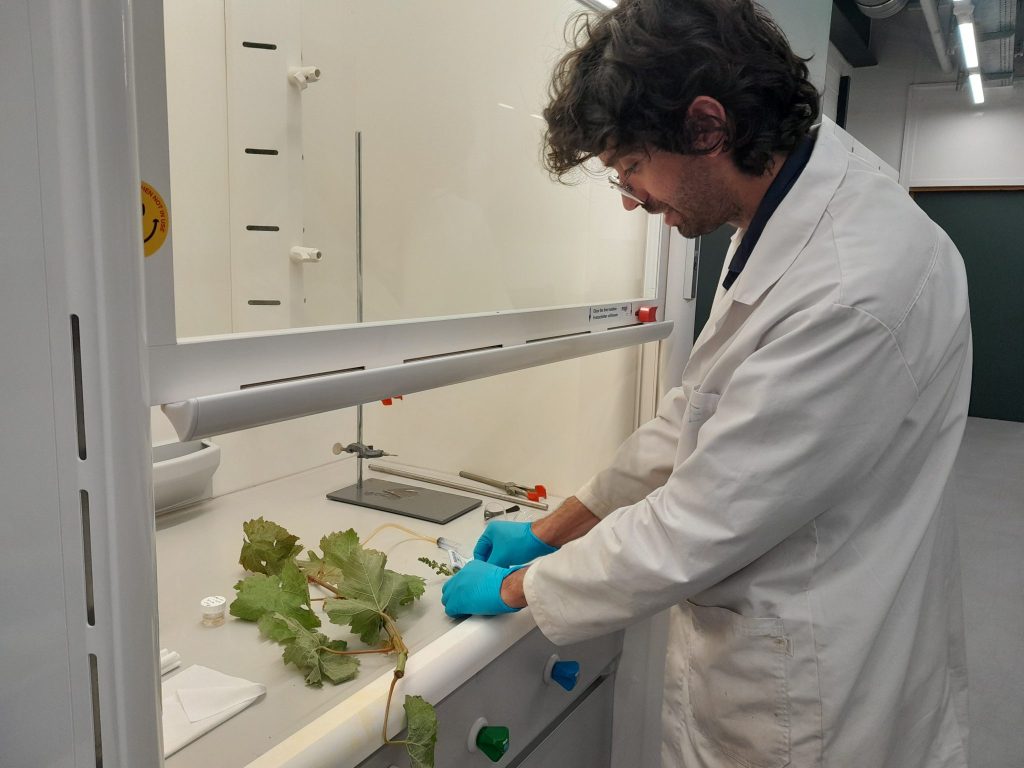
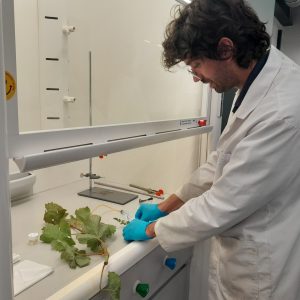
The main question is how the tolerance to embolism in the fruit evolves throughout the season. The hypothesis is that before véraison, the plant prioritizes the leaves (which are more tolerant to drought), while after véraison, the plant shifts its focus to the fruit. To test this, grapevine branches bearing clusters are sampled at two sites (one exposed to drought and the other irrigated) in the experimental vineyard of Leytron, in the Valais region. Throughout the season, the minimum potential is measured at both sites (from June to September). The vulnerability curve is obtained at two points in the year, pre- and post-véraison, for three parts of the plant: the leaf, the fruit, and the branch, using an optical method in the laboratory (available at EPFL).
For more information please contact [email protected] and [email protected].