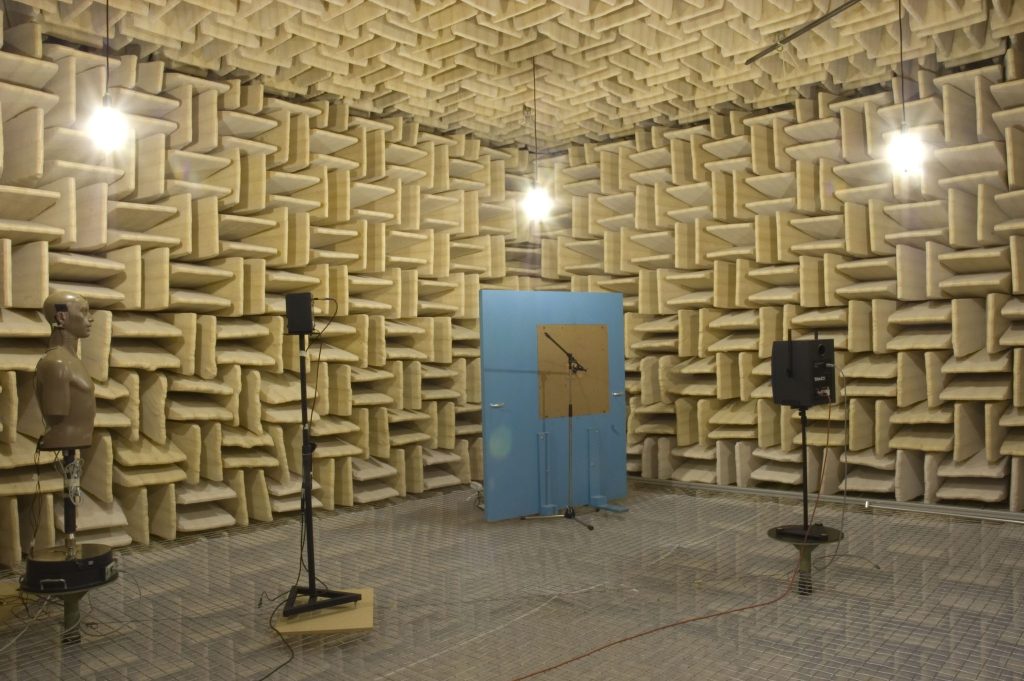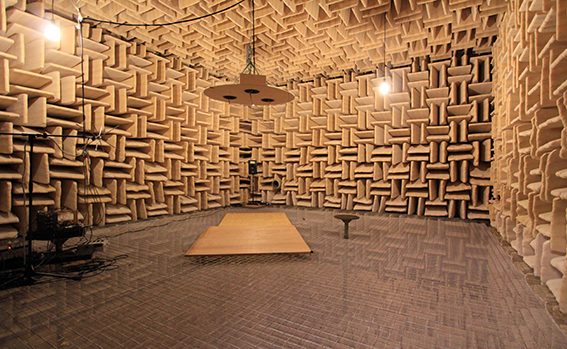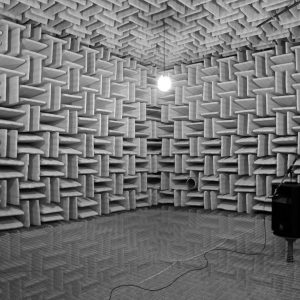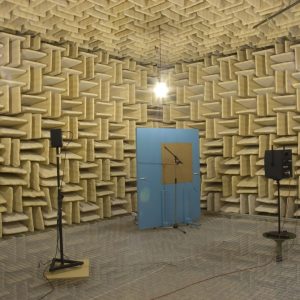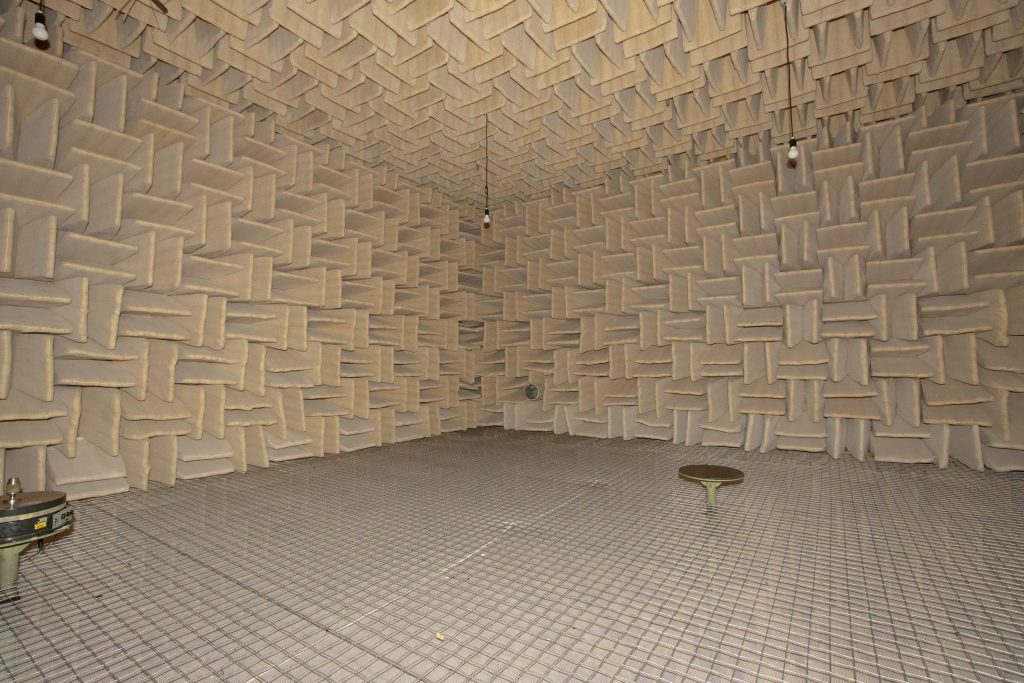
An anechoic (literally “without echo”) room is designed to avoid sound reflections from the room walls, thanks to sound-absorbing materials. In most case, the sound absorbers take the form of wedges filled with porous materials (eg. glasswool, melamin foam, etc.), and they can either cover the whole walls surfaces (thus labelled “anechoic”), or a part of them (generally only the ground floor is left in concrete, thus referred to as “semi-anechoic”). However, the anechoic character of the room is limited by the depth of the wedges, owing to the “quarter-wavelength law“: at EPFL-LWE, the wedges are 1 meter thick, thus absorbing all frequencies above 80 Hz.
Besides being ultra-absorbent internally, the room is also fully decoupled from the building thanks to mass-spring dampers, making it insensitive to external vibration sources.
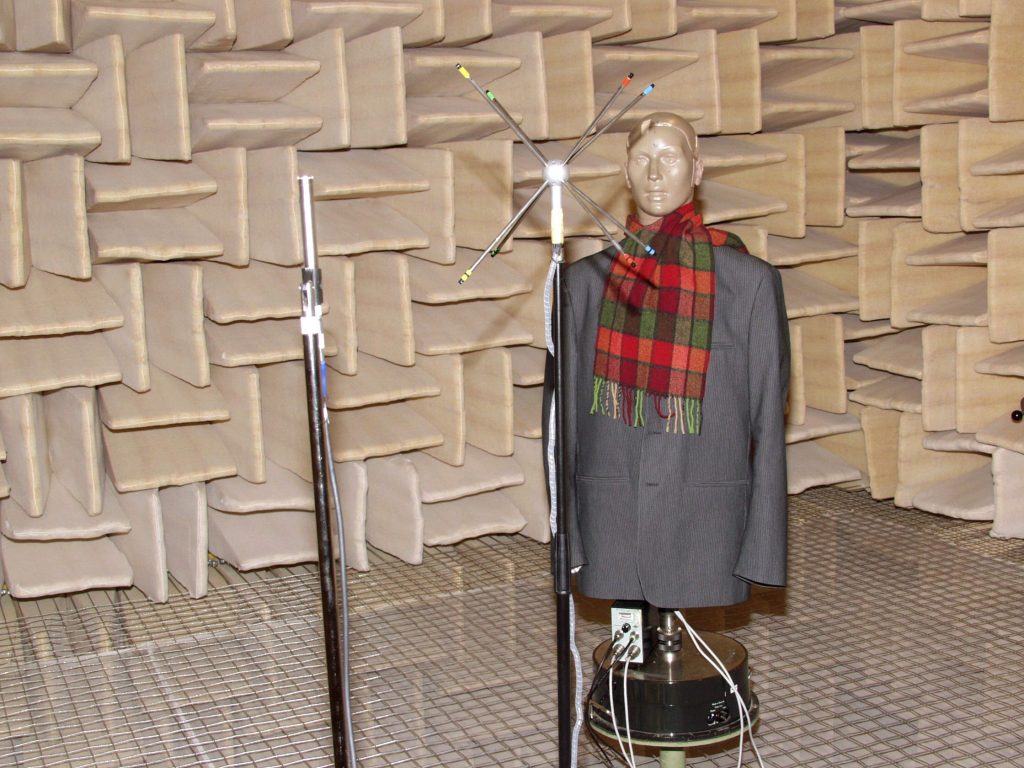
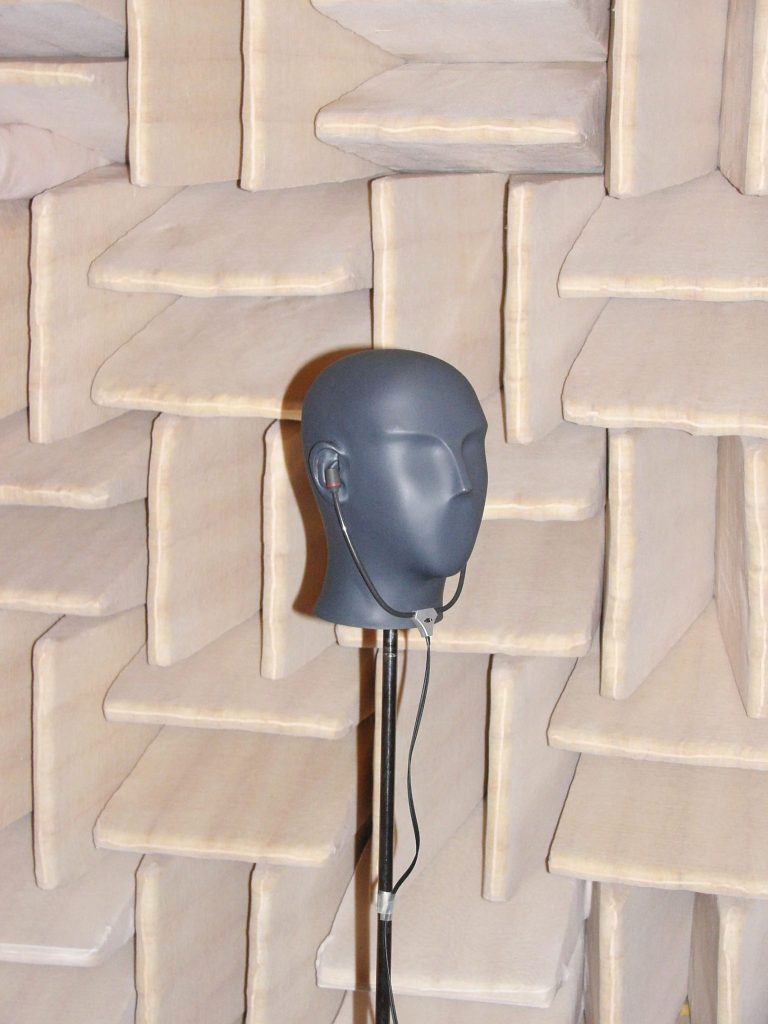
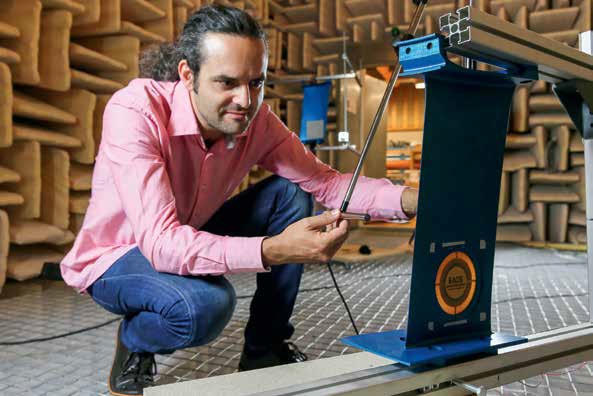
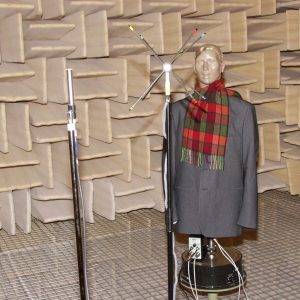
This room is generally used to characterize sound sources, most specifically loudspeakers and loudspeaker cabinet (eg. measuring sound pressure levels, harmonic distortion, or directivity under standard conditions after IEC 60268-5), but also microphone systems. Also, owing to the ultra-low background level (globally in the range of 20 dB(A)), this facility is often used to measure or record very tiny sound sources.
Besides, the anechoic room is the perfect environment to test and optimize specific audio rendering systems such as “Quiet zones” concepts.