
Our research operates across two closely connected areas

Laboratory of Proteostasis & Molecular Therapeutics (LPMT), ISIC, SB
Protein Degradation
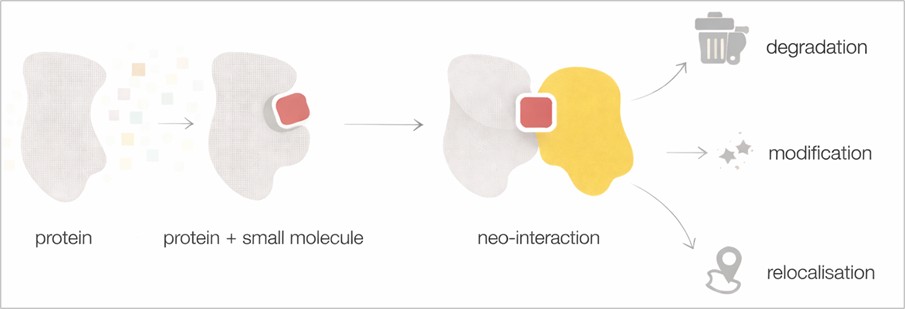
Small-molecule degraders are emerging as a powerful new approach to eliminate disease-relevant proteins by engaging the cell’s own quality-control machinery. We study the molecular logic that governs protein degradation to understand how endogenous degradation pathways and proteostasis factors operate, and how these processes can be perturbed, rewired, or mimicked by small molecules, including molecular glue degraders.
Protein Recognition and Rewiring
We investigate how protein–protein interactions and recognition interfaces regulate stability, function, and localization, and how these interactions are tuned by post-translational modifications, mutations, and small molecules. We explore how chemical interventions can reshape these recognition grammars to alter protein behavior.
Across both areas
We integrate chemical biology, biochemistry, structural biology, and functional genomics to study protein fate at the molecular level. Our long-term goal is to uncover new ways to modulate protein behavior – including, but not limited to, degradation – and to translate these insights into therapeutic strategies.