
Keywords
Canopy Index, Biodiversity, LiDAR, RGB Imagery, Hyperspectral, Multispectral, Remote Sensing, Change Detection, Object Detection, Point-Cloud Segmentation, Computer Vision, Super-Resolution
Introduction
As part of EPFL’s Climate and Sustainability Strategy 2030, more than 450 trees have been planted on campus to promote biodiversity and resilience. Your task in this semester project is to help monitor how the campus canopy index evolves and to evaluate the impact of these planting efforts since they began in 2023.
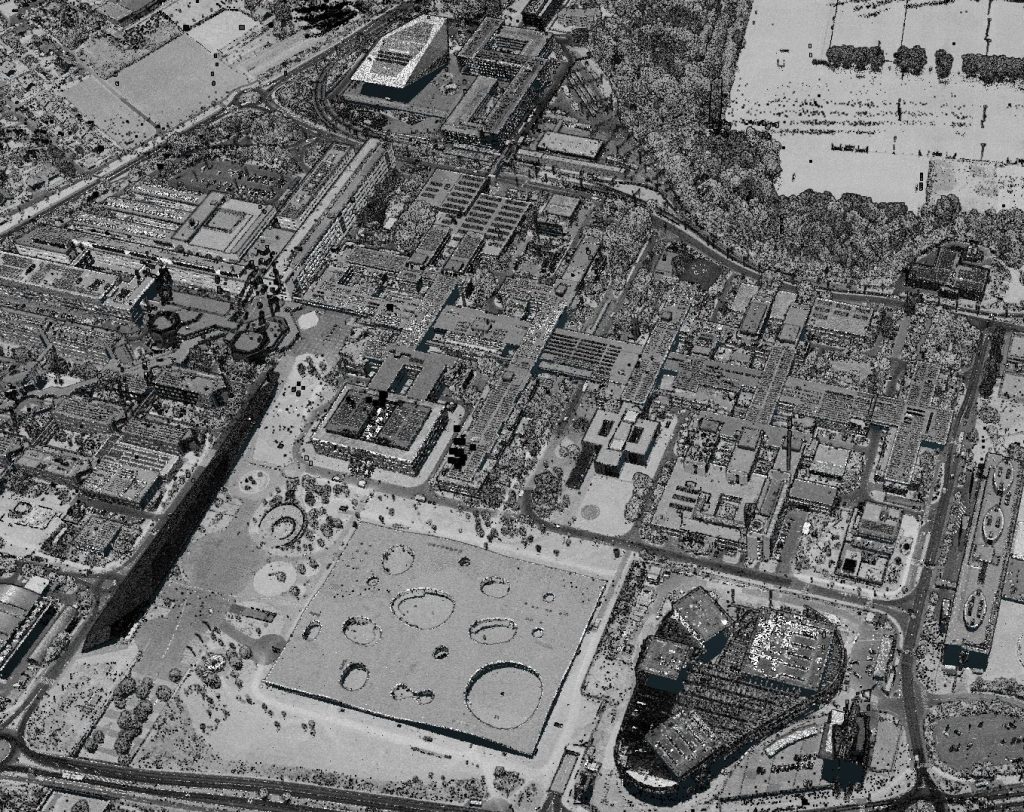
You will work with high-resolution remote sensing data (LiDAR, RGB) acquired over EPFL in June 2024, as well as satellite or airborne imaging. Your role will be to explore the use of guided super-resolution methods for canopy estimation, and deliver a reproducible workflow that EPFL can rely on for future monitoring campaigns.
Objectives
- Familiarize yourself with the fundamentals of canopy monitoring, its ecological relevance, and how computer vision supports remote sensing.
- Classify the high-resolution dataset using an established, well-documented pipeline and use the output as a pseudo ground-truth.
- Find satellite imagery or other appropriate products as well as guide data to perform guided super-resolution.
- Select and implement the most suitable approach for canopy index extraction, using techniques such as image segmentation, object detection, or index-based estimates such as the NDVI.
- Apply your workflow to the EPFL campus over the last few years, validate your method with the pseudo ground-truth and outline the results and emerging trends regarding the canopy index.
- Discuss how reproducible your workflow is for future monitoring campaigns, and analyze the impact of data quality, phenology, and other sources of uncertainty and bias in your results.
- Prepare a clear, concise report where you summarize your methodology, findings, and recommendations for future monitoring.
Challenges
- Temporal resolution and repeatability of measurements
- Processing and harmonizing diverse data sources
- Phenology and seasonal effects on canopy estimates
- Uncertainty and bias related to the modeling and input data
Prerequisites
- Experience with Python, computer vision and deep learning libraries
- Familiarity with GIS and image/point cloud analysis
- Interest in environmental monitoring and sustainability
Contact
Interested candidates are kindly asked to send their CV and a short motivation statement by email to Nicola Santacroce, Jan Skaloud.