
Current
1. Microdroplet-aided isolation of arsenic-methylating microorganisms from soil
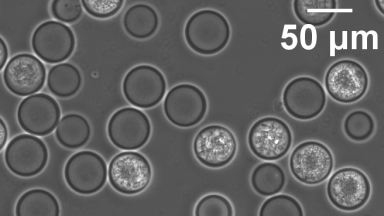
Arsenic is a toxic element that is widely distributed in the environment and mainly occurs as inorganic compounds. However, some soil microorganisms can transform these into organic (methylated) compounds. This is problematic in agricultural soils such as in rice paddy fields because the methylated arsenic can be taken up by the plant, affecting crop health and food safety. Although arsenic methylation is known to be particularly active in flooded (i.e., oxygen-deprived) soils, very little is known about which anaerobic microorganisms (bacteria, archaea) have this unusual phenotype, what controls it (biochemical pathway), and what benefit microorganisms derive from it. These question remain elusive because of the difficulty in isolating these organisms, and thus, the limited laboratory studies. We seek to isolate arsenic-methylating microorganisms from a paddy soil. To do so, we recently developed a novel approach combining droplet-based microfluidics, arsenic whole-cell biosensors, and FACS. The goal of this project is to optimize the use of this approach and to isolate and further characterize new isolates.
2. Arsenic methylation as ‘microbial warfare’ strategy
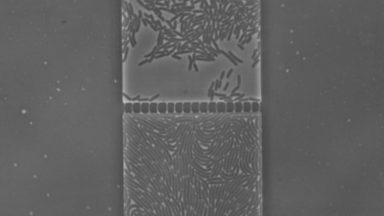
Arsenic is a widespread metalloid contaminant which occurs primarily in inorganic form (AsIII and AsV) in the environment. Some microbes are able to methylate AsIII to produce organic compounds (MMAsIII and DMAsIII) which are highly toxic but spontaneously oxidize in the presence of air to form less toxic compounds (MMAsV and DMAsV). Arsenic methylation is known to be a detoxification mechanism in aerobic microbes since pentavalent products are less toxic than AsIII. However, the purpose of arsenic methylation in anaerobes remains elusive. One hypothesis, referred to as ‘microbial warfare’, is that anaerobic microbes methylate AsIII to produce toxic MMAsIII and DMAsIII (which are preserved since oxygen is absent) that they release and use as antibiotics to inhibit microbial competitors. The goal of this project is to test the ‘microbial warfare’ hypothesis through a set of time lapse microscopy experiments where two strains (a methylator and a control) will be co-cultured in microfluidic chips. Image analysis tools will be used to quantitatively measure the extent of ‘warfare’.

3. Arsenic partitioning in solid and aqueous phases in Mekong Delta sediments
Arsenic contamination of groundwater is a major public health issue in Southeast Asia. Mekong Delta, one of the world’s major agricultural area is threatened by Arsenic (As) release from sediments into groundwater, a vital drinking water and irrigation resource in Vietnam. Field observations have revealed complex biogeochemical dynamics in which microbial response to seasonal variation seems to play a crucial role in As release. This project aims to investigates arsenic speciation in the solid and aqueous phases through a combination of field observations and laboratory experiments. By exploring how iron minerals are transformed in Mekong Delta sediments and how they may influence arsenic behavior, we aim to provide new insights into groundwater quality and the geochemical mechanisms that shape it.
4. Development of high-throughput method for DNA extraction from groundwater samples
Arsenic contamination of groundwater is a public health issue in Southeast Asia. The Mekong Delta, one of the world’s major agricultural area is threatened by arsenic (As) release from sediments into groundwater, a vital water resource in Vietnam. Field observations have revealed complex biogeochemical dynamics in which the microbial response to seasonal variation seems to play a crucial role. Agricultural practices, such as fertilizer use, may further influence groundwater geochemistry, adding another layer of complexity to this system. Surprising patterns of nitrogen cycling under anoxic conditions are observed in this environment, suggesting links between microbial activity, nutrient transformations, and arsenic mobility. This project investigates the role of microorganisms in these processes through a combination of field observations and laboratory experiments. By exploring how nitrogen transformations occur in Mekong Delta sediments and how they may influence arsenic behavior, we aim to provide new insights into groundwater quality and the microbial mechanisms that shape it.