
By Marie Jones, 08.04.2026
Dear reader,
I am back with another update from Brussels! One month into the traineeship, I now have a better overview of the functioning of the EU Commission and where scientists can make a real difference. In this blog post, published in my personal capacity, I only share my own experience and views 😉
This month, my team organised an “expert group meeting”, creating a great opportunity for science-to-policy dialogues. On the occasion of the publication of a report from the Joint Research Centre (JRC, the EU’s science service) on labelling for packaging, the researchers presented their study to a large group of stakeholders. As minute-taker, I had to pay close attention to everyone’s position and could notice first-hand how non-scientific factors must be balanced out. Beyond the challenge for scientific evidence to be available at the right time for policy-making, I realised that scientists also need to enter these political discussions ready to make alternative proposals.
In the same meeting, I had prepared a short presentation, and while I was quite proud of my good-looking graphs, it stood out that they were still too complex, and that I should have only highlighted the key message. That’s a valuable tip for all of us: policy-makers don’t want to see the data from which we extracted a result, they just want the result in one sentence, full stop (but we still need the data to prove everything, just not during the meeting).
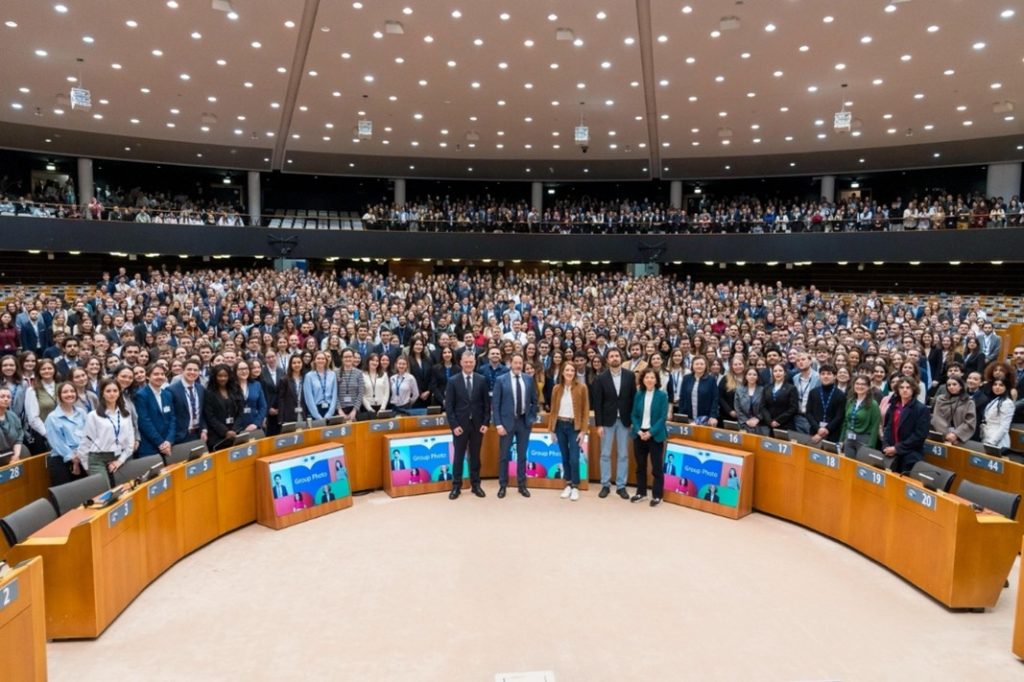
To make sure that we never lose sight of the power of elected Members of Parliament, our opening conference was organised at the European Parliament, where we were welcomed by no one else than the President of the Parliament herself. Surprisingly, most speakers had been Blue Book trainees themselves and saw this event as passing the torch to the next generation. They insisted on curiosity and networking as key elements for a successful experience at the Commission.
On the last day of the month, I had another occasion to meet our leaders by joining an event at the Permanent Representation of France to the European Union. Co-organised by the Institut Jacques Delors (they also run a super cool series of workshops on the EU called ‘Académie Notre Europe’, highly recommended if you speak French!), the event introduced the future Ocean Act in the presence of three Ministers, one Commissioner and one Director-General. All speakers stressed the vital importance of the ocean in every aspect of life and Europe’s plans to protect and restore it. While interesting initiatives on making a digital twin of the ocean were presented, I was hoping to hear more about the regeneration of marine ecosystems, and in particular how the EU was thinking of collecting back all the existing plastic waste.
Okay Marie, it’s all really cool these conferences and big meetings, but what do you do on a daily basis? It can more or less be summarised in one word: ‘drafting’. While meeting important people is a fun part of the job, I spent most of my time behind the computer doing desk research to answer questions from various stakeholders. I already had the chance to respond to industry players, a Member of Parliament, representatives of Member States and to prepare a press release. I did not expect that dealing with correspondence was such a core responsibility of Policy Officers, and yet I know that my legal colleagues dedicate even more time to this very important democratic task by directly answering to citizens.
Beyond correspondence, I also drafted background documents on biobased materials, a clear continuation of my PhD thesis, at the intersection of the two teams of my unit, ‘Bioeconomy’ and ‘Sustainable materials’. As a scientist, it is sometimes hard to judge how much technical background should be provided, and what can be assumed as basic knowledge.
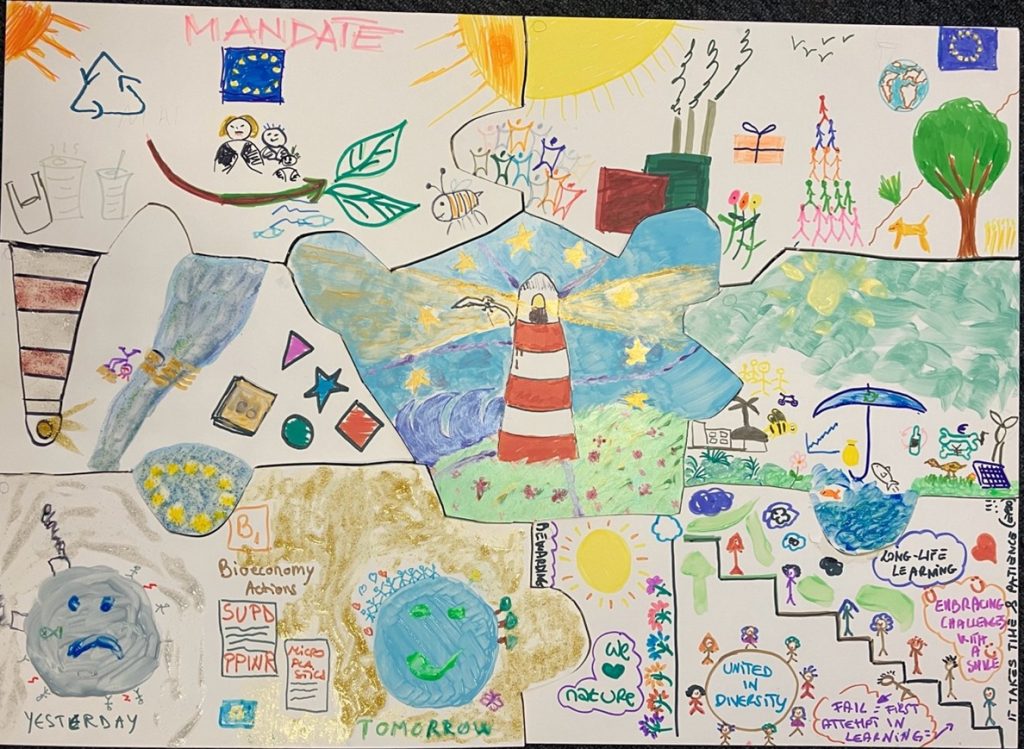
Overall, my tasks of the first months were perfect to get familiar with the plastic legislation in action, reading the legal texts as I look for answers to the stakeholders’ questions. I am almost tempted to call this a ‘scavenger hunt’ into SUPD! For those of you who know the Dunning-Kruger learning curve, I reached ‘mount stupid’ just before the expert group meeting, thinking ‘I’ve got this’ for my very small subset of the tasks, and then discovered the actual scope of my unit’s work. Now I am embracing my ignorance to learn as much as possible over the remaining 4 months. However, what I immediately made mine is the vision of my unit: we are a lighthouse, shining against all odds on the paths towards a more sustainable society and a healthier planet.
See you after 100 days!
Disclaimer: This blog post only reflects the personal views of the author, not the positions of the European Commission.