
Hello everyone!
For those who don’t know me, I’m Marie and I co-founded SPAN during my PhD because I always knew that I wanted my work to have a wider societal impact. Transitioning from academia to the science-policy interface just felt like the natural next step, but getting there isn’t very straightforward for a Chemical Engineer… Nevertheless, since March 2nd, I am living the first part of this dream as a Blue Book trainee at the European Commission in Brussels. With this series of blog posts (after 1 week, 1 month, 100 days at the end), I want to share with you my experience of the traineeship, and who knows perhaps inspire you to apply to the next call! For this post, I will give you a summary of my first week and how I got there in the first place.
“Blue Book Traineeship”? What even is that?
First thing first, let me briefly introduce the European Union (EU) and how it functions. After World War Two, countries in Western Europe wanted to avoid future wars by integrating their industries and economies. From 6 original countries focused on reducing trade barriers, the Union grew and evolved into its current size of 27 Members States (after Brexit) working together on almost every topic.
The legislative body is the European Parliament, directly elected by EU voters. The Council of the European Union, where national representatives sit, is the main decision-making body. The European Commission (EC) puts EU policies into action, while the Court of Justice holds trials and the Court of Auditors makes sure that the EU’s money is managed correctly. Like national ministries, the EC is made up of Directorate General (DG) on specific fields. Many agencies and executive bodies gravitate around these 5 major institutions, such as the European Research Council (handling ERC grants), the European Environment Agency, the Joint-Research Centre (JRC), just to name a few.
The Blue Book traineeship is a 5-months program happening twice every year to provide work experience within the Commission and the agencies to young graduates.
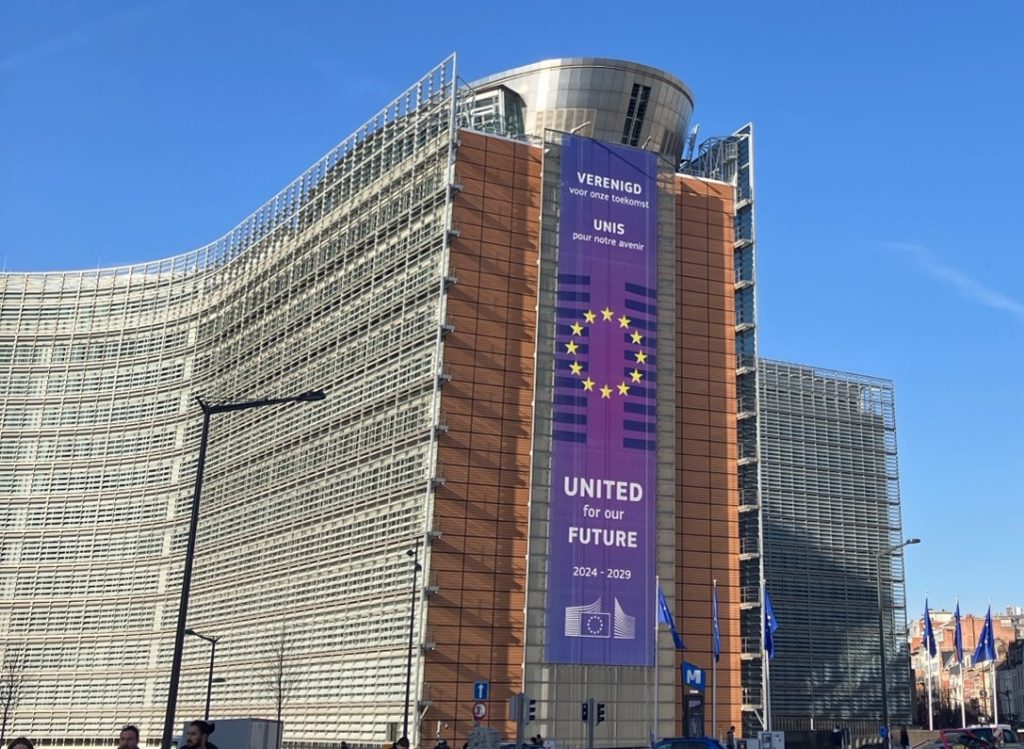
First week as Blue Book trainee
For whoever went on Erasmus before, the week leading up to the first day in Brussels felt just like going on exchange: a dozen WhatsApp groups with phone numbers from all over Europe belonging to young people excited for their next adventure. It all became concrete when we queued up on Monday March 2nd to pick up our badge: it’s official, I am a trainee at the European Commission!!! The rest of the day was mostly spent chatting with the other trainees in my department DG Environment. I wasn’t expecting to meet so many fellow PhDs so it was quite reassuring. It was also my first time interacting with lawyers who usually plead at court, a whole new world to me.
The real stuff only started on the second day where I met my team “Sustainable Materials & Bioeconomy” during their weekly meeting. As a Chemical Engineer who worked on the economic viability and the sustainability of bioplastics and their production processes, this was a match made in heaven. Following the agenda was particularly challenging but it revealed to me how much integration there needs to be between the political (negotiating with Member States and the Parliament), scientific (providing the evidence of a law) and legal (drafting the law) worlds. Everyone has their own language, but it needs to be understood by everyone else around the table.
So far, my core responsibility is following up with the implementation and evaluation of the Single-Use Plastics Directive. We are collecting evidence and opinions from various stakeholders, also from us consumers since this law was very visible for the general public through the ban of plastic straws and the caps attached to plastic bottles. It is very important to know what worked well and what could have been done differently to make sure the law remains relevant in a constantly evolving world.
I’m not going to lie, the first week was mostly reading documents to get familiar to the field, but instead of just scientific articles, I was mostly reading legal texts. But research was never far, since JRC reports are the foundation of our analysis. Actually, so close that I even met my PhD-idol in the cafeteria, during my numerous “coffee-chats” to question my new colleagues on their role in the Unit.
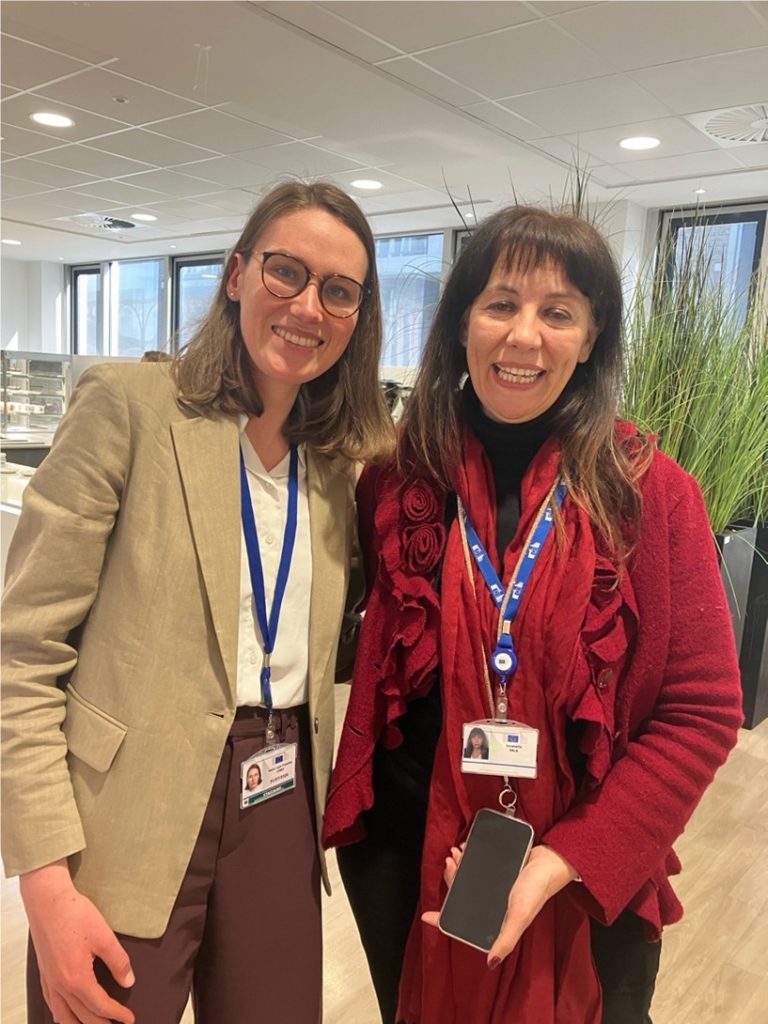
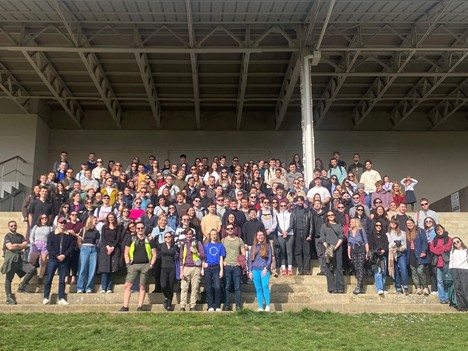
This first week was also the occasion to get to know the other trainees in the more social context of an outdoor bar (or more precisely an entire square full of only Eurocrats drinking beers) and a hike in the forest. Despite our different backgrounds and nationalities, we all share a desire to serve the greater good and it makes me hopeful for the future of the EU!
Overall, my first week exceeded my expectations in terms of the technical depth of the work, the expertise and dedication of everyone around me, and the importance of the missions that I will contribute to. I am eager to keep learning and discovering over the next 5 months.
Looking forward to sharing the rest of my first month in a follow-up post!
Did I spark your interest?
If my first impressions of the Commission are something that you think that you might like, please get in touch so I can help you with your application! I summarise briefly here some key admin stuff:
The only requirements are to have already completed a Bachelor degree, IN ANY FIELD, and to speak two European languages, one of which must be French, English or German. While most applicants have a legal or science policy background, engineers and scientists fully have their place in European institutions so see your technical expertise as a real advantage when applying.
The first phase of recruitment is to fill in your CV on their platform, with supporting documents for everything that is mentioned (degree, exchange semester, internship, etc). Then they will select about 3000 candidates based on a point system, for about 1000 positions. The job descriptions are available a week before the platform opens and you can apply only to one per week, during three consecutive weeks. It is only at this stage that the motivation letters are needed.
Useful links:
- Blue Book traineeship: https://traineeships.ec.europa.eu/index_en
- Schuman traineeship at the EU Parliament: https://www.europarl.europa.eu/at-your-service/en/work-with-us/traineeships
- Scientific traineeship at the JRC: https://joint-research-centre.ec.europa.eu//work-us/jobs-jrc_en#scientific_traineeships