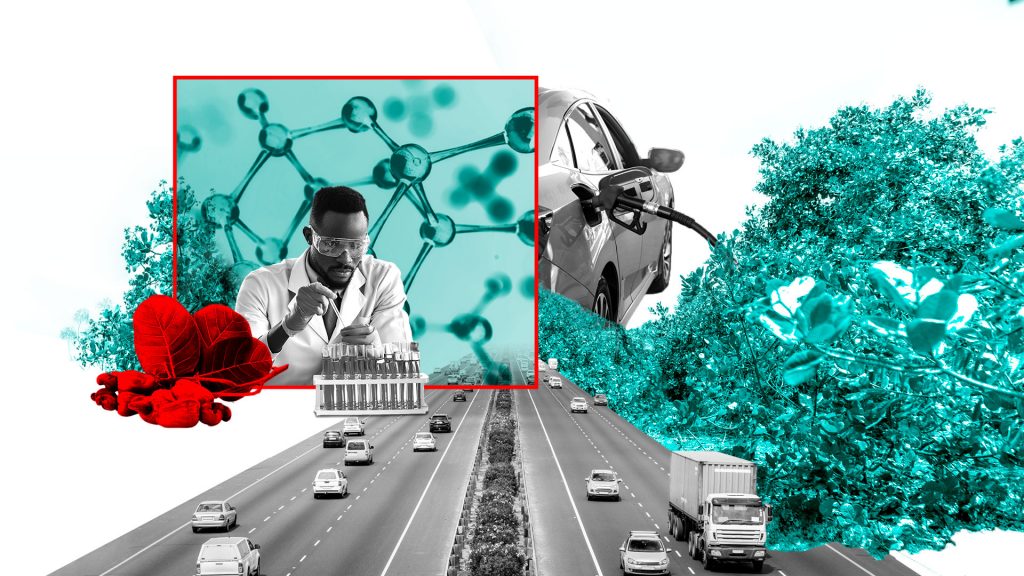
This team will demonstrate that biofuels can be sustainable, by assessing the potential to convert diverse inedible biomass (e.g. underutilized plants) into biodiesel. In addition, the project will also target the production of high value biochemicals from such inedible biomass.
Keywords: Underutilized plants, Agricultural wastes, Biodiesel, Natural antioxidants, Catalytic upgraded biofuels

Thomas Kivevele
Thomas is currently working as a Senior Lecturer at the School of Materials, Energy, Water and Environmental Sciences (MEWES), Nelson Mandela African Institution of Science and Technology (NM-AIST), Arusha – Tanzania.

Jeremy Luterbacher
In 2014, Jeremy returned to EPFL as a Tenure-Track Assistant Professor and head of the Laboratory of Sustainable and Catalytic Processing.
Research project
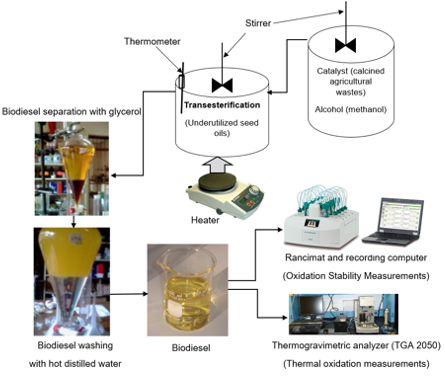
Despite the vast potential of non-food plant-based biofuels, there are still exceedingly large data gaps in understanding their applicability in Africa. Presently, biofuels are largely produced from food-based oils, posing an existential threat to food security (food-versus-fuel debate). The goal of this project is to use vegetable oils from selected underutilized plants for biofuel production.
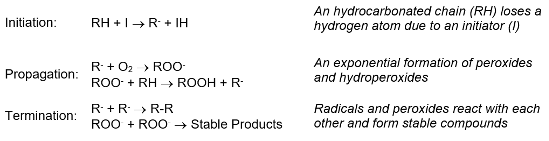
We will also produce significant amount of low-cost bio-based heterogeneous catalysts using selected agricultural wastes with significant amount of alkaline and alkaline earth metal oxides. The application of these catalysts will reduce the use of conventional homogeneous catalysts which are reported to be ineffective. On the other hand, biodiesel oxidizes during long-term storage, hence doping it with antioxidants is inevitable. Instability of biodiesel is one of the outstanding barriers towards its commercialization. Natural antioxidants extracted from plants and agricultural wastes with high phenolic contents are gaining attraction by researchers in the recent years. Synthetic antioxidants have been widely used in improving stability of biodiesels but they are expensive.
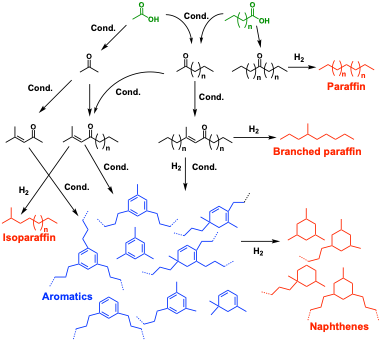
Furthermore, due to poor cold-flow properties and oxidation instability of biodiesel, catalytic upgrading of fatty acid esters through ketonization and aldol condensation is an ongoing research area in the context of improving the properties to diesel-like fuels or targeting high value applications such as aviation fuel. In this project, we intend to transform selected underutilized plants and agricultural wastes in Africa into “cash crops/wastes” for the production of biodiesels, low-cost heterogeneous catalysts, natural antioxidants, and catalytic upgraded biofuels.
Publications / Science news
Kivevele T. & Kichonge B. 2024. Techno-economic evaluation of transesterification processes for biodiesel production from low quality non-edible feedstocks: Process design and simulation, Energy (ELSEVIER), 297 (2024) 131302.
Kahimbi H, Kichonge B. & Kivevele T. 2024. Kinetics and energetics of biodiesel oxidation stability: The impact of Uapaca kirkiana-derived natural antioxidants, Biofuels, Bioprod. Bioref (WILEY). .
Kahimbi H, Kichonge B. & Kivevele T. 2024. Insights into antioxidant dosage determination for improving biodiesel oxidation stability: a comprehensive review, Biofuels (TAYLOR & FRANCIS).
Kapile F. A, Bereczky A. Lukács K, Ntalikwa J. W, Kivevele T. 2024. Investigation of engine performance, exhaust emissions, and combustion characteristics of a diesel engine fueled with Adansonia digitata methyl ester doped with nanosilica additive extracted from agricultural waste, Biofuels, Bioprod. Bioref (WILEY).
Kichonge B. & Kivevele T. 2024. Sustainable biofuel production in Sub-Saharan Africa: Exploring transesterification process, nonedible feedstocks, and policy implications. WIREs Energy and Environment (WILEY), 13(3), e519.
Kariim I, Bakari R, Waidi Y. O, Kazmi W. W, Malla S. K, Park J, Syed M. W, Bhatti A. H, Omer A, Swai H, Lee I. & Kivevele T. 2024. Optimization of solvothermal liquefaction of water hyacinth over PTFE-acid mediated kaolin catalyst for enhanced biocrude production, Journal of Analytical and Applied Pyrolysis (ELSEVIER), 106416.
3rd Great African Rift Colloquium, 13-17 mai, Université Maasai Mara, Kenya. Poster « Améliorer la stabilité du biodiesel grâce à des antioxydants naturels : une approche durable vers les énergies renouvelables ».
Methodology workshop in Nairobi, Kenya, on “L’énergie grise : socialisation des technologies et des ressources à faible intensité énergétique dans la production d’énergies alternatives “, April 2024.
Clean Cooking Symposium, Dar es Salaam, Tanzania, June 2024.
Seminar on the implementation of the Global Initiative for the Development and Promotion of Cooperation in Higher Education between China and the Indian Ocean Region, 2024.
Meeting at the Centre National de la Recherche Scientifique (CNRS) à l’Ecole des Hautes Études en Sciences Sociales (EHESS), 20 – 30 November 2023.
Biofuels workshop, October, 2023. Participants from EPFL (LPDC), EXAF-EPFL, Swiss Embassy, NM-AIST, Arusha Technical College, Tanzania Commission for Science and Technology (COSTECH), Tanzania Renewable Energy Association (TAREA) and Ministry of Energy.
September 2023: Competition organised in primary and secondary schools around Arusha, based on a project relating to biofuels.
Kariim, I., Park, J., Kazmic, W. W., Swai, H., Lee, I. & Kivevele, T. 2023. Solvothermal liquefaction of orange peels into biocrude: An experimental investigation of biocrude yield and energy compositional dependency on process variables, Bioresource Technology (ELSEVIER), 129928.
Junior Faculty development projects

Machine Learning for IoT

Parkinson’s disease cure
Reactive, sponge-like materials

Hybrid Solar-energy