
Category: features
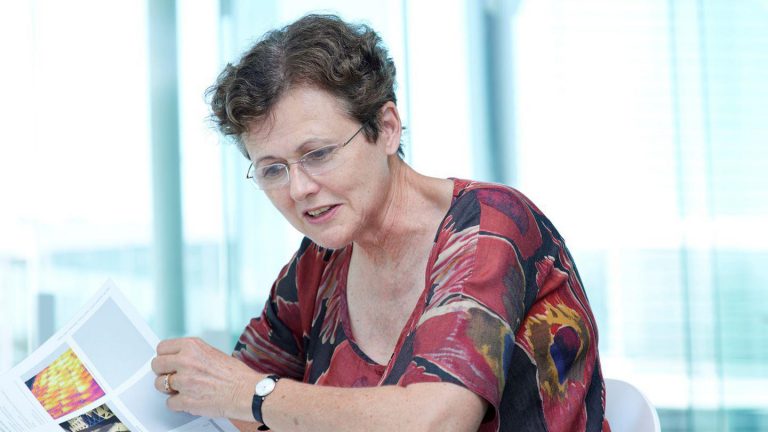
Concrete – a game changer in climate technology
Tough stuff – that suits her. Karen Scrivener is a renowned expert on the world’s most widely used building materials: concrete and cement. But cement as a binding agent has fallen into disrepute as a “climate killer”. The professor disagrees. The head of the Laboratory for Building Materials at EPFL’s School of Engineering in Lausanne (…)
BBC speak to Karen Scrivener about green concrete
The BBC produced an article “Building’s hard problem – making concrete green”. Among other questions, the author asked “So how can you [produce concrete] without releasing so much CO2?”, and spoke to Prof. Scrivener in search of an answer. Read the full article: Building’s hard problem – making concrete green
Qiao Wang – My Thesis in 180 seconds
Franco Zunino to give webinar on LC3 at Rilem
Dr. Franco Zunino, winner of the 2020 Nanocem PhD Prize, will give a webinar organised by Rilem (International Union of Laboratories and Experts in Construction Materials, Systems and Structures) on Thursday, December 2nd, 2021. The technological breakthrough of Limestone Calcined Clay Cement (LC3): how much further can (must) we go in the sustainable concrete endeavour? (…)
The BBC consults Karen Scrivener on cement and the climate question
Karen Scrivener was interviewed by the BBC for their podcast The Climate Question for an episode entitled: “Must our future be cast in concrete?“. Jump to Karen’s first answer: here.
The Road to Greener Concrete Is Paved With Clay
Among the myriad steps needed to clean up construction, a cement made with heated clay stands out. The Argos plant in Rioclaro, Colombia, can churn out as much as 2.3 million tons of cement a year, used to build everything from dams and bridges to skyscrapers and stadiums. That has helped make Argos the biggest cement (…)
Nanoparticles: from fundamentals to applications in life sciences
The CCMX Winter School will once again take place in Kandersteg, Switzerland. Aiming to bring together a group of no more than 24 PhD students from various research institutions, the course is designed to cover a series of important scientific aspects regarding the development, characterization and application of nanoparticles for medical applications and to provide (…)
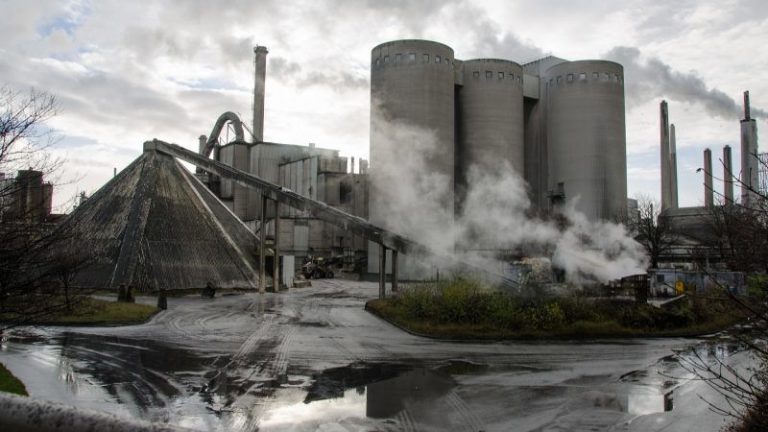
Swiss researchers chart path to zero-emission cement
By Frédéric Simon of EURACTIV.com The construction sector can cut polluting emissions up to 80% by applying efficiency measures along the whole value chain, according to new research. If combined with carbon capture and storage (CCS) technology, emissions could even be brought down to zero by 2050, they argue. Achieving carbon neutrality in the (…)
No other material can compete with concrete
It’s safe to say that the world as we know it would be quite different without concrete. Following its invention in the 19th century, modern concrete – or Portland cement – quickly found its place in the building industry. This novel material could be used to rapidly build roads, bridges, dams and many other types (…)
Know your cement, get greener concrete
by ETH Zurich An international team of scientists has created a new database of molecular dynamics models that simulate the properties of cement in all its varieties. It’s intended to help fine-tune this component of concrete and curtail emissions in its manufacturing process.Cement is used to bind concrete, the most-used construction material in the world (…)