Project SABLE
A Seascape Genomics Approach to Improve Coral Reefs Conservation Strategies Against Bleaching
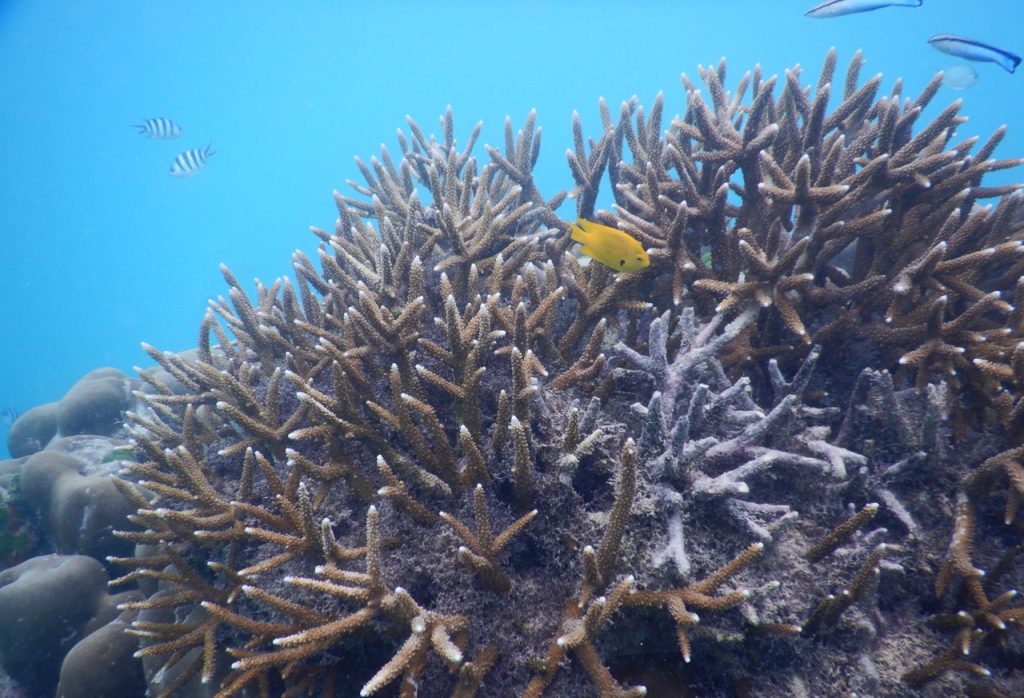
In future, conservation efforts to preserve coral reefs will increasingly depend on the adaptation capabilities of corals, an aspect rarely addressed in the past. This project aims at promoting a conservation strategy that accounts for the adaptive potential of corals against bleaching. To do so, we elaborate a Seascape Genomics methodology to assess conservation priorities and apply it to the UNESCO world heritage reef system of New Caledonia. This genomics-based tool will be used to inform local authorities on conservation priorities and the methodology transferred to any reef system around the world.
SABLE project is a joint project between ENTROPIE lab (at the Institute of Research for Development, New Caledonia), and the GEOME lab (at the Ecole Polytechnique Federale (Lausanne, Switzerland).
Satellites and genomics to support coral reef conservation in the warming Indian Ocean
Tropical coral reefs are hotspots of biodiversity, but they are suffering severe degradation due to anomalous heatwaves. A recent study combined satellite observation of ocean conditions with genomic analyses of reef-building corals in the Western Indian Ocean region. This analysis pinpointed reefs likely to host heat-tolerant corals, and mapped their natural larval dispersal via sea currents across more than 1,000 km of open ocean.
Click here for more information.