
Type: Master Project
Objective: Investigate unsteady motions of wings outside and inside ground effect and explain what the major differences in the flow field are. The idea would be to see whether motion can also be more efficient near the ground as it is for gliding.
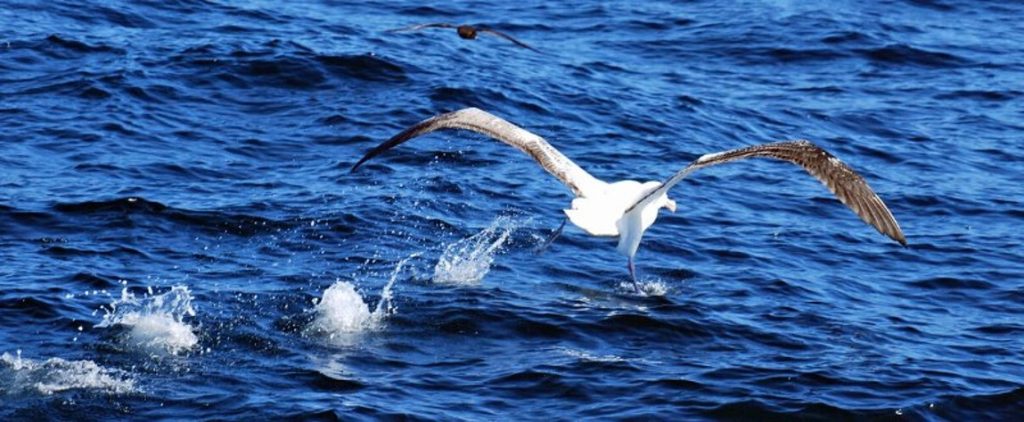
For example, in the case of a bird take-off, high energy flapping will be inevitable to overcome gravity and drag, so is the flapping strategy near a surface more efficient than the same applied outside of the ground effect? In particular, what defines an efficient motion near the ground?
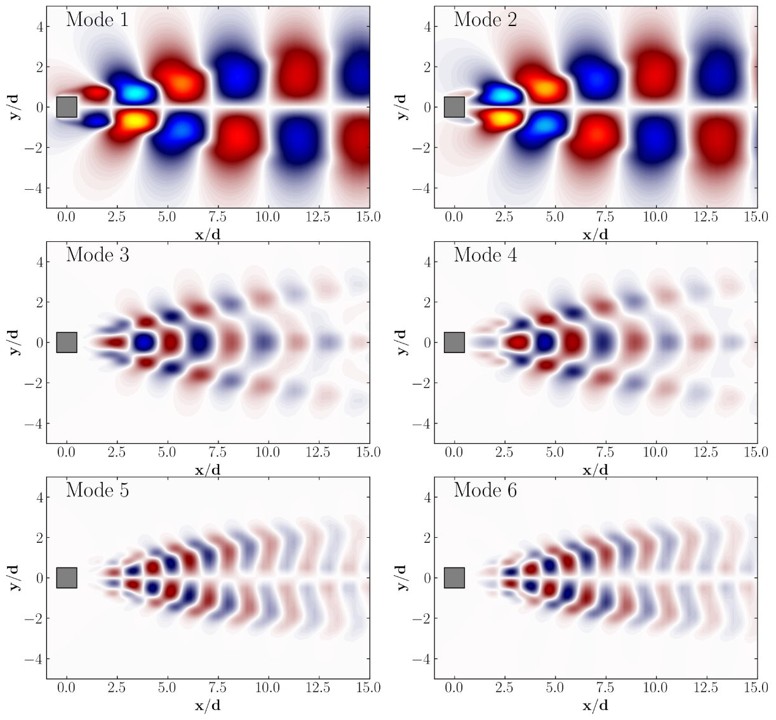
One way to investigate this would be to compute Proper Orthogonal Decomposition (POD) of the unsteady wake and review the most energetic modes between cases inside (IGE) and outside ground effect (OGE).
Tasks:
- Review how to create unsteady CFD simulation with overset mesh, ideally starting with 2D motions, using NACA airfoil 4412, and review heaving & pitching motions of various kind (with low and high flow incidences).
- Doing POD/DMD in wake of static wings OGE & IGE, using OpenFoam and a Detached-Eddy Simulation to simulate the flow around wings with a fairly large incidence
- Combining the two.
Supervisor(s): Tristan Favre & Edouard Boujo