
IEEE RoboSoft Half-day Workshop
When: 11th April 2026, 8:45AM – 12:30PM
Where: Room 409, Kanazawa Institute of Technology, Japan
Calls for Contributions
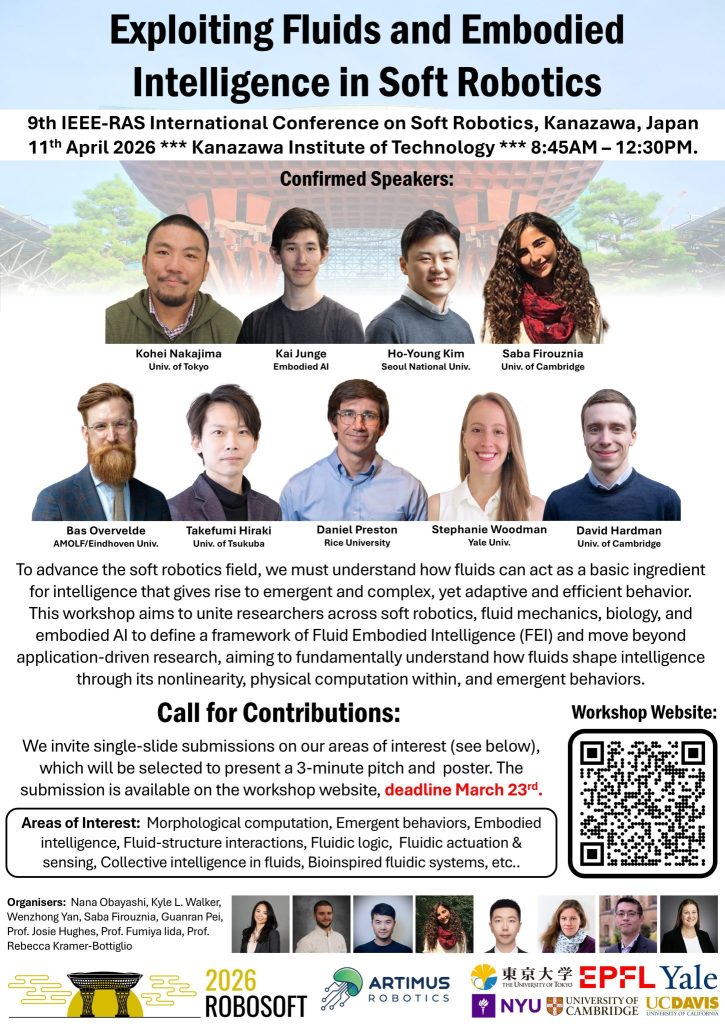
We invite you to submit your vision for rethinking fluids not simply as actuation media, but as an integral part of the body, mind, and environment of soft robotic systems. We encourage bold ideas that explore how fluidic phenomena, material intelligence, and embodied interactions can reshape sensing, control, adaptation, and autonomy in soft robotics, opening new pathways to address both long-standing and emerging challenges in the field.
Selected participants will have the opportunity to deliver a quickfire pitch and/or present a poster at the workshop. We will also be providing cash prizes to the top pitches!
Contributions can be submitted as a single slide summary (any form of media is allowed) of the vision and how it relates to your research. The submission form is available here.
The deadline for contribution submission is 23rd March 2026. The best contributions will be selected for a 3-minute flash pitch during the workshop program. Contribution acceptance will be notified by 27th March 2026.
If you have any questions and feedback, please send an email to Wenzhong Yan.
Topics of Interest:
- Morphological computation
- Emergent behaviors
- Embodied intelligence
- Fluid-structure interactions
- Fluidic logic/actuation/sensing etc.
- Collective intelligence
- Bioinspired fluidic systems
- Other related topics
Workshop Summary
For robots that rely on embodied intelligence, fluids play a central role in shaping the brain (controller), body, and environment. While soft robotics depend on fluids for actuation, sensing, and interaction, the role of fluids in shaping intelligent behavior have been underexplored and have been treated as a passive component rather than an active component of intelligence. To advance the soft robotics field, we must understand how fluids can act as a basic ingredient for intelligence that gives rise to emergent and complex, but adaptive and efficient behavior. This workshop aims to unite researchers across soft robotics, fluid mechanics, biology, and embodied AI to define a framework of Fluid Embodied Intelligence (FEI) and move beyond application-driven research. We instead aim to fundamentally understand how fluids shape intelligence through its nonlinearity, physical computation within, and emergent behaviors.
Program at a Glance (Tentative)
All times are in Japan Standard time.
| 8:15 – 8:45 | Registration & setup | |
| 8:45 – 9:00 | Workshop start & introduction | Organizers |
| 9:00 – 9:50 | Brain, Body or Environment Micro-talks: Session 1 10-minute talks from experts with 2-3 minutes Q&A | Speakers: Ho Young Kim Takefumi Hiraki Stephanie Woodman Daniel J. Preston |
| 9:50 – 10:05 | Young Researcher Pitches 3-minutes each | Speakers: Amanda Johnson Lorenzo Vignoli Kadri-Ann Pankratov Caitlin Le |
| 10:05 – 10:30 | Breakout Sessions | Everyone |
| 10:30 – 10:50 | Coffee break & posters | |
| 10:50 – 11:50 | Brain, Body or Environment Micro-talks: Session 2 10-minute talks from experts with 2-3 minutes Q&A | Speakers: Saba Firouznia David Hardman Johannes T. B. Overvelde Kai Junge Kohei Nakajima |
| 11:50 – 12:15 | Breakout Sessions | Everyone |
| 12:15 – 12:30 | Concluding Remarks by Organizers | Everyone |
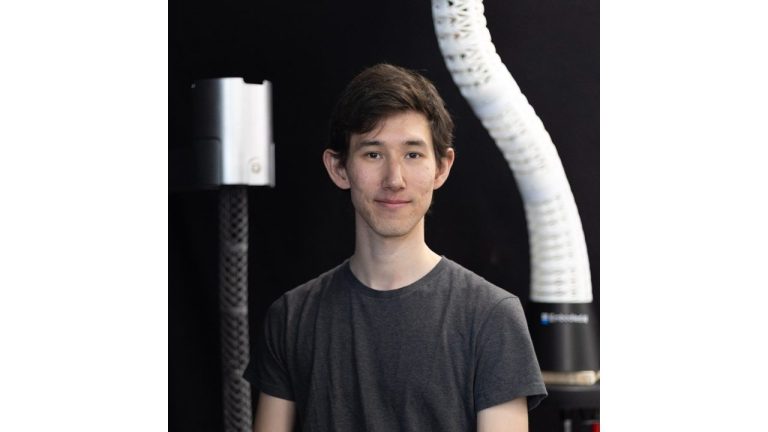
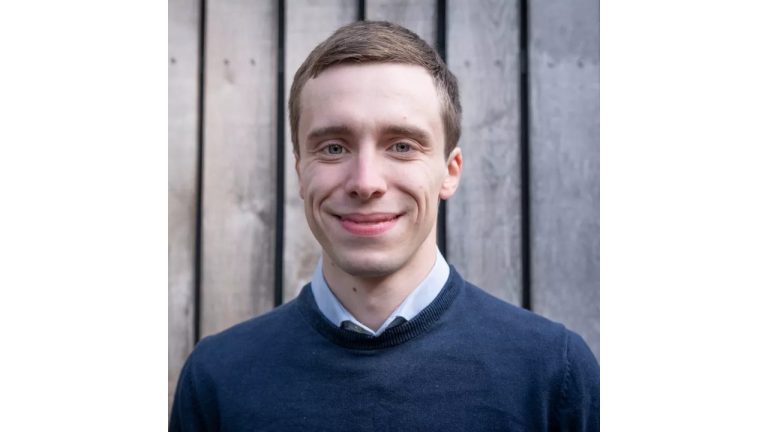
Confirmed Speakers




Timetable
All times are in Japan Standard time.
8:45 – Welcome & Intro
9:00 – Ho Young Kim: “From liquid to robot: armoring fluids with soft solids”
9:12 – Takefumi Hiraki: “Fluid-like behavior in multi-robot systems for swarm user interfaces”
9:24 – Stephanie Woodman: “Stretchable electronics enabling fluid-like morphing robots”
9:36 – Daniel J. Preston: “Sheet-based mechanofluidic intelligence”
9:50 – Young Researcher Talks from invited early-career researchers and students
Speakers:
- Amanda Johnson: “Fluidic Sensing Skins: Open Cell Foam for Intelligent Contact Perception“
- Lorenzo Vignoli: “Programmable Compliance for Passive Flow Exploitation“
- Kadri-Ann Pankratov: “Molecular Level Changes Mediated by Internal Liquid for Situated Robots“
- Caitlin Le: “Going With the Flow: Enabling Fluid-Like Burrowing in Granular Media“
10:05 – Breakout Sessions: Brain, Body, Environment Discussion
10:30 – Coffee break & Poster session
List of Posters:
- Xiaoxian Xu: “Repositionable Whisker Sensing via Boundary EIT“
- Catherine Merchant: “An Embodied Approach to Soil Sensing Using Electrical Impedance Tomography
“ - Khater Omar: “Sensing and Actuation in Fluid-Driven Granular Robots“
- Sofia Urbina: “Embodied Intelligence in Soft Systems: Sheet-based Magnetic Valves for Fluidic Control of Soft Robots“
10:50 – Saba Firouznia: “Shapeshifting Droplets Driven by Instability for Soft Machines”
11:02 – David Hardman: “Non-Contact Manipulation of Floating Objects”
11:14 – Kai Junge: “Soft manipulators in complex real world environments”
11:26 – Johannes T. B. Overvelde: “Towards autonomous machines by exploiting mechanofluidic instabilities”
11:38 – Kohei Nakajima: “Physical reservoir computing with fluids”
11:50 – Breakout Sessions: Brain, Body, Environment Discussion
12:15 – Discussion, Next Steps, & Wrap-up
Organizers
- Nana Obayashi, New York University, USA
- Kyle L. Walker, EPFL, Switzerland
- Guanran Pei, EPFL, Switzerland
- Saba Firouznia, University of Cambridge, UK
- Wenzhong Yan, UC Davis, USA
- Prof. Josie Hughes, EPFL, Switzerland
- Prof. Rebecca Kramer-Bottiglio, Yale University, USA
- Prof. Fumiya Iida, University of Tokyo, Japan