News

© Julien Gacon

IBM Research Award – 2025 – Julien Gacon

— Scalable Quantum Algorithms for Noisy Quantum Computers EPFL thesis n°11132 Thesis directors: Prof. Giuseppe Carleo, Dr Stefan Woerner

© 2025 EPFL

EDPY PhD student awarded Google PhD Fellowship in Quantum Computing

— Alessandro Sinibaldi, from Prof. Giuseppe Carleo’s group, has been awarded the Google Fellowship 2025 for his groundbreaking research on harnessing artificial intelligence to simulate quantum computers! This prestigious honor highlights his exceptional talent and the exciting potential impact of his work.

Electron orbital of a Rydberg atom with n=12. Colors show the quantum phase of the highly excited electron. Credit: Berndthaller (Wikimedia)

Hidden quantum patterns: Exploring simulations of exotic matter

— EPFL researchers have used a powerful simulation technique to test whether a collection of laser-controlled atoms behaves like a special kind of quantum matter, where particles stay mysteriously linked over long distances.

© 2025 EPFL

Computational Quantum Science Lab at the APS Global Physics Summit

— At this year's APS Global Physics Summit in Anaheim, the Computational Quantum Science Lab showcased several contributions, spanning quantum dynamics, neural-network methodologies, topological quantum systems, and quantum chemistry. Eight among lab members and collaborators delivered presentations reflecting both theoretical ingenuity and practical advancements, offering insights into the lab’s innovative approach at the intersection of quantum computing and machine learning.

©EPFL/iStock photos (Peter Hansen)

New benchmark helps solve the hardest quantum problems

— Predicting the behavior of many interacting quantum particles is a complicated process but is key to harness quantum computing for real-world applications. A collaboration of researchers led by EPFL has developed a method for comparing quantum algorithms and identifying which quantum problems are the hardest to solve.

©Johan Jarnestad/The Royal Swedish Academy of Sciences”

EPFL professor Giuseppe Carleo cited in Nobel Prize announcement

— The 2024 Nobel Prize in Physics has been awarded to John J. Hopfield and Geoffrey E. Hinton for the invention of artificial neural networks which lie at the heart of machine learning and artificial intelligence. Among the many groundbreaking applications of this work, the Nobel Committee highlighted the pioneering work by QSE Center researcher Giuseppe Carleo in their scientific backgrounder.

Riccardo Rossi © 2024 EPFL

Riccardo Rossi wins Hermann Kümmel Early Achievement Award

— EPFL researcher Riccardo Rossi has been recognized for his groundbreaking work in computational quantum field theory, earning the prestigious Hermann Kümmel Early Achievement Award in Many-Body Physics.

© 2023 Springer Nature

Quantum chemistry with neural-network wave functions

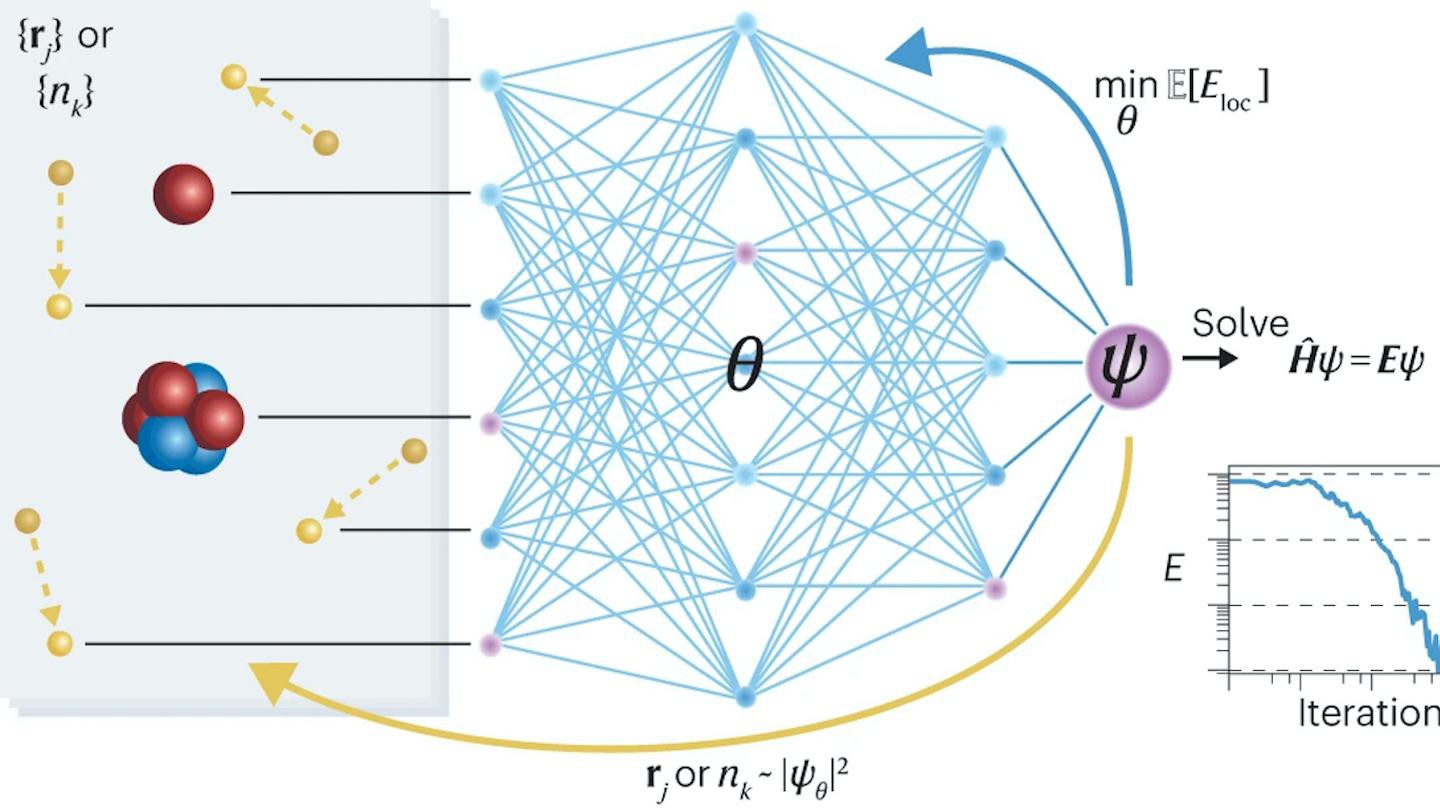
— A recent review article in Nature Reviews Chemistry presents a comprehensive analysis of the integration of neural-network wave functions within quantum chemistry. Titled "Ab initio quantum chemistry with neural-network wave functions," this review offers insights into the potential and challenges of using machine learning techniques to solve the fundamental equations of quantum mechanics.

© 2023 APS

CQSL at the APS March Meeting in Las Vegas

— CQSL is presenting several of its works at the APS March Meeting in Las Vegas, between March 6th and Friday 10th

© 2022 EPFL

The expressive power of neural networks in quantum physics

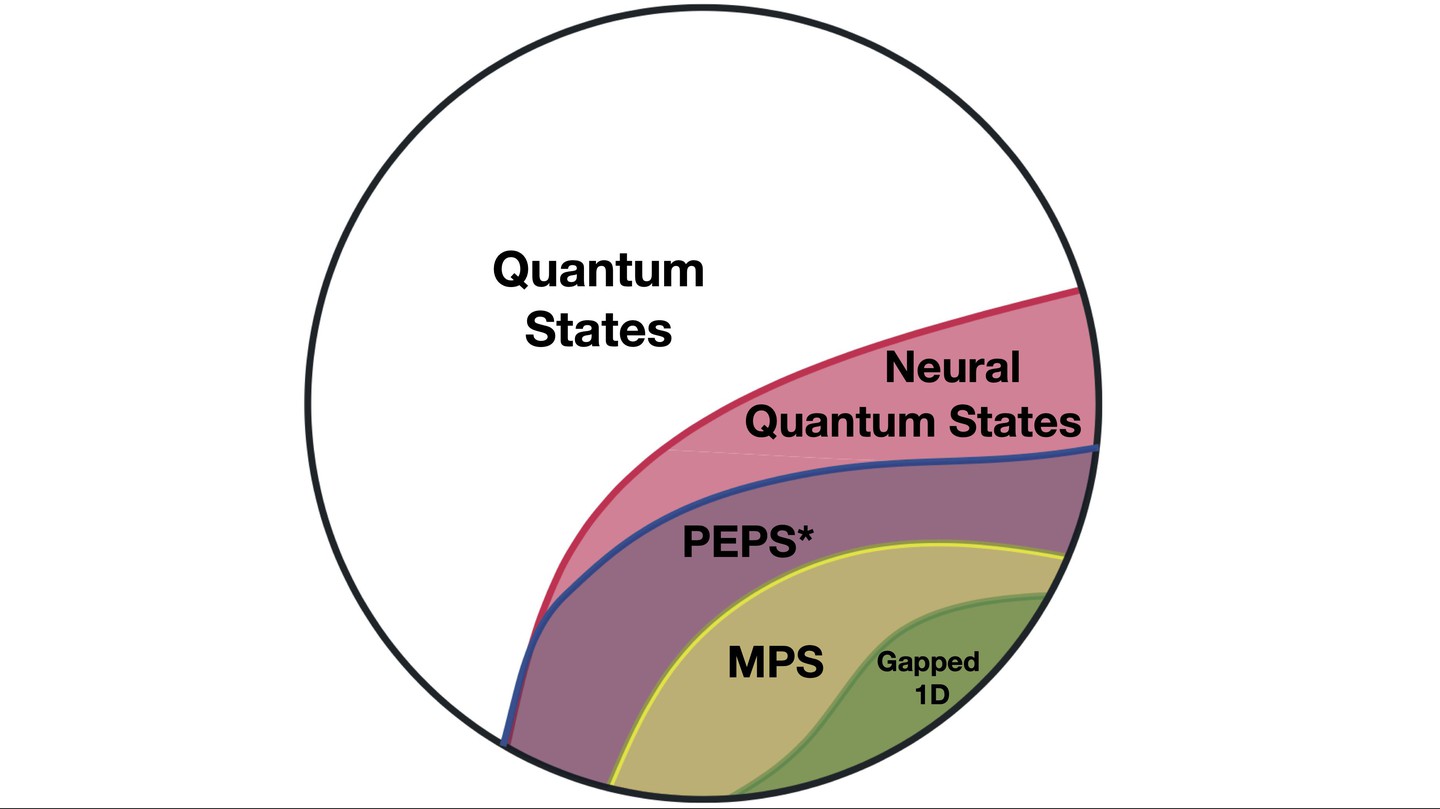
— A collaboration between the CQSL lab at EPFL and the Hebrew University of Jerusalem in Israel has studied the expressive power of neural network representation of quantum states. By means of an efficient mapping of tensor contractions to deep neural networks, the work establishes for the first time the efficient representability of one-dimensional gapped ground states by means of neural quantum states. Other connections to tensor-network states are also discussed. 

© 2022 Simons Foundation/Javier Robledo Moreno

'Ghost' electrons used to reconstruct behaviour of quantum systems

— Physicists at EPFL and the Flatiron Institute’s Center for Computational Quantum Physics have created a new way to simulate quantum entanglement between interacting particles. Their approach involves adding extra, fictitious particles controlled by an artificial intelligence technique called a neural network.

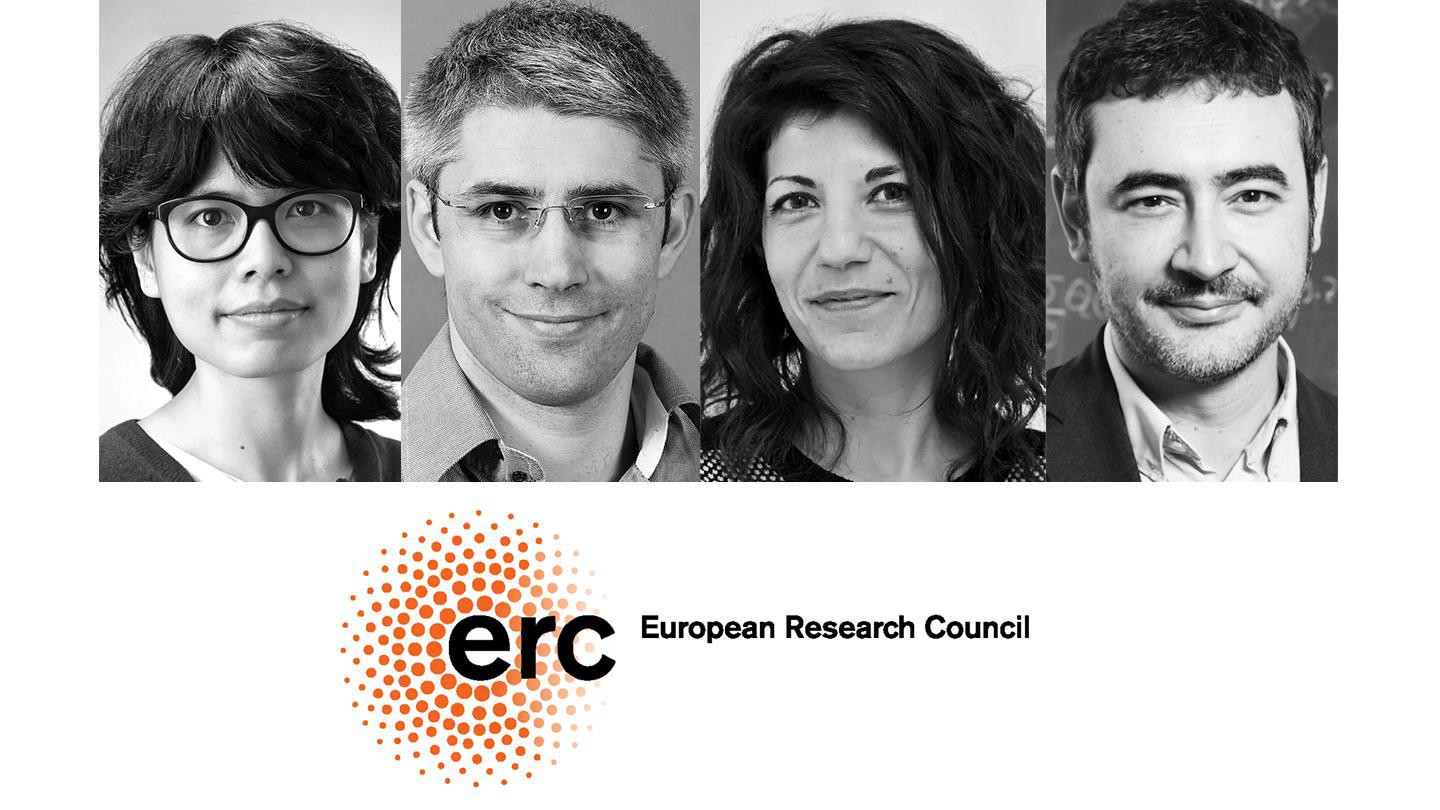
Yimon Aye, Jean-Philippe Brantut, Raffaella Buonsanti, and Giuseppe Carleo. Credit: EPFL

Four SB researchers awarded ERC Consolidator Grants

— Four professors at EPFL’s School of Basic Sciences have been awarded Consolidator Grants from the European Research Council (ERC). As Switzerland currently has a non-association status to Horizon Europe, their projects will be financed by Switzerland’s State Secretariat for Education, Research and Innovation (SERI).

© 2022 American Physical Society

CQSL research featured at the APS "March Meeting" in Chicago

— The incoming March meeting of the American Physical Society will feature several presentations of the research performed at EPFL's Computational Quantum Science Lab (CQSL) and in collaboration with other institutions worldwide. CQSL work will be presented in about 8 oral presentations, including 2 invited talks. 

© 2022 EPFL

Machine-Learning Augmented Sampling for the Molecular Sciences

— CQSL is a proud sponsor of the forthcoming CECAM workshop entitled "Machine Learning Augmented Sampling for the Molecular Sciences".

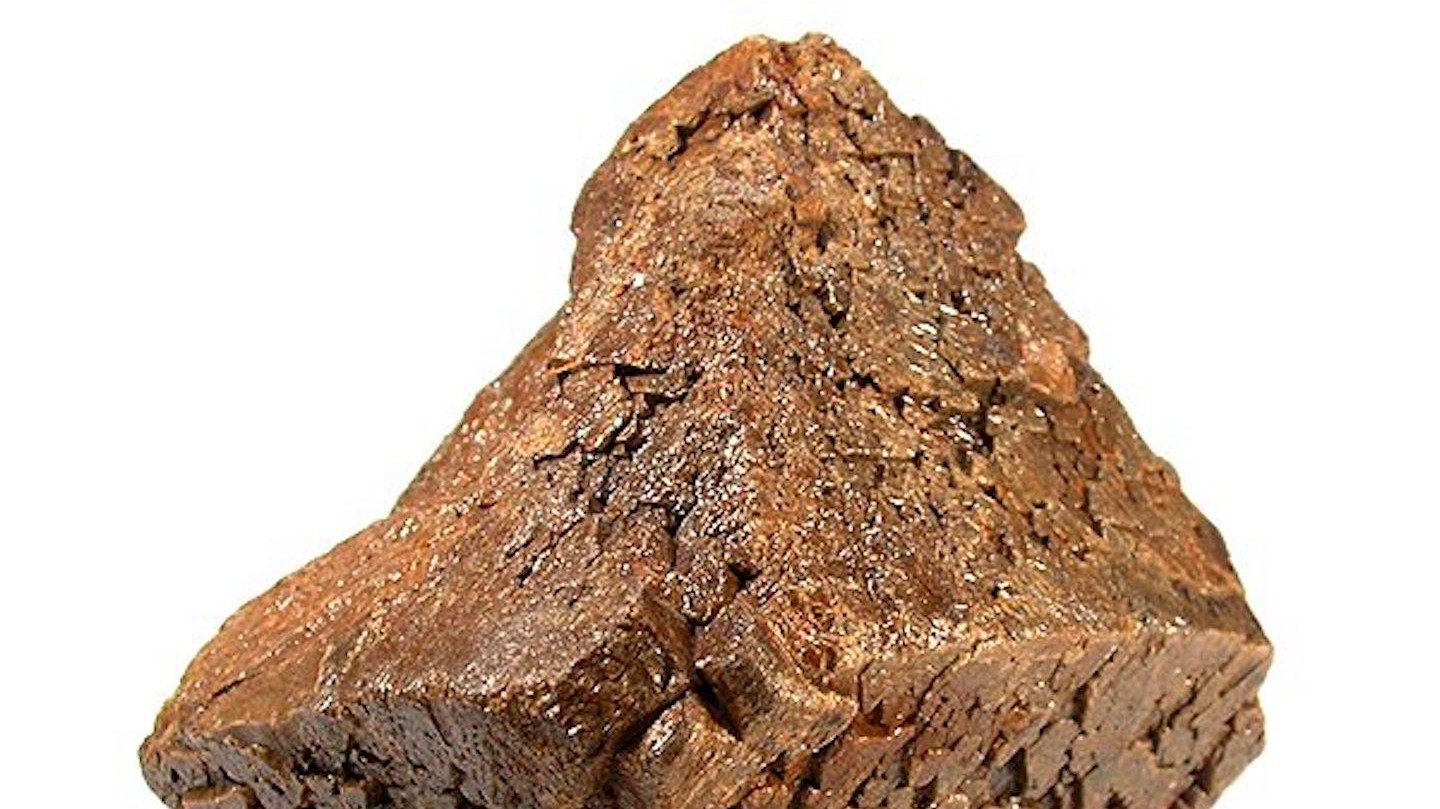
Rob Lavinsky, iRocks.com – CC-BY-SA-3.0, CC BY-SA 3.0 <https://creativecommons.org/licenses/by-sa/3.0>, via Wikimedia Commons

Quantum Magnetism on the Pyrochlore Lattice

— A collaboration between CQSL and the University of Zurich has studied the elusive properties of quantum magnets on the Pyrochlore Lattice. The work, now published in Physical Review X, is based on extensive numerical simulations relying on novel ways to represent complex quantum wave functions, including deep convolutional neural networks.

iStock photos

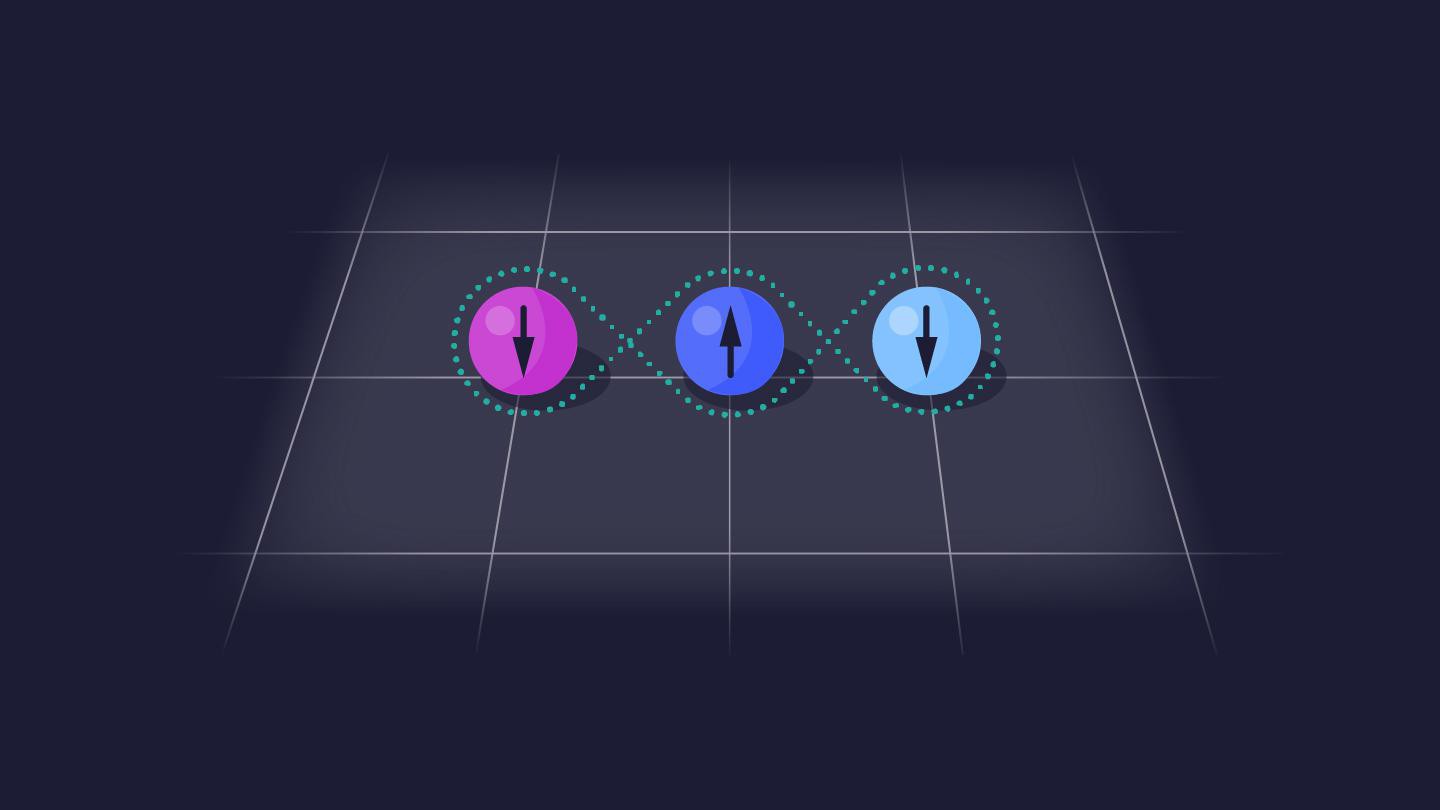
Running quantum software on a classical computer

— Two physicists, from EPFL and Columbia University, have introduced an approach for simulating the quantum approximate optimization algorithm using a traditional computer. Instead of running the algorithm on advanced quantum processors, the new approach uses a classical machine-learning algorithm that closely mimics the behavior of near-term quantum computers.

© 2021 American Physical Society

Neural-Network Quantum States for Nuclear Matter

— The first application of neural-network quantum states to nuclear matter has been published in Physical Review Letters, in a collaboration between CQSL and Argonne National Laboratory, in Chicago. 

© 2021 Giuseppe Carleo and Matija Medvidović

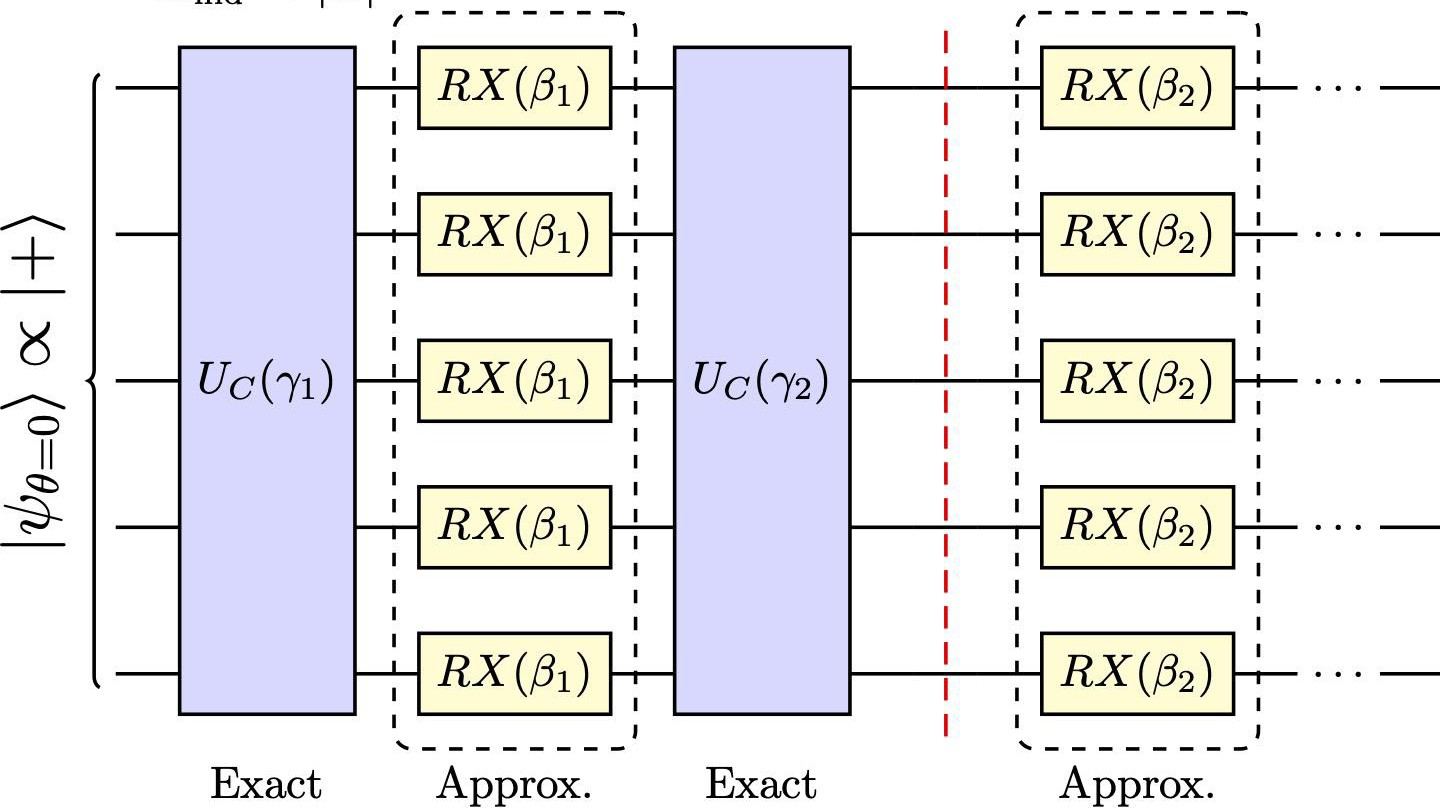
Simulating quantum computing with classical machine learning

— A recent CQSL work published in NPJ Quantum Information shows how machine learning techniques can be used to simulate the inner workings of near-term quantum computers.

© 2021 American Physical Society

CQSL at the APS March Meeting 2021

— The Computational Quantum Science Lab will be present at the virtual edition of the 2021 APS March Meeting, with about 8 contributed talks and 2 invited seminars. 

All news