
Polymander II: an amphibious salamander robot equipped with contact and flow sensors
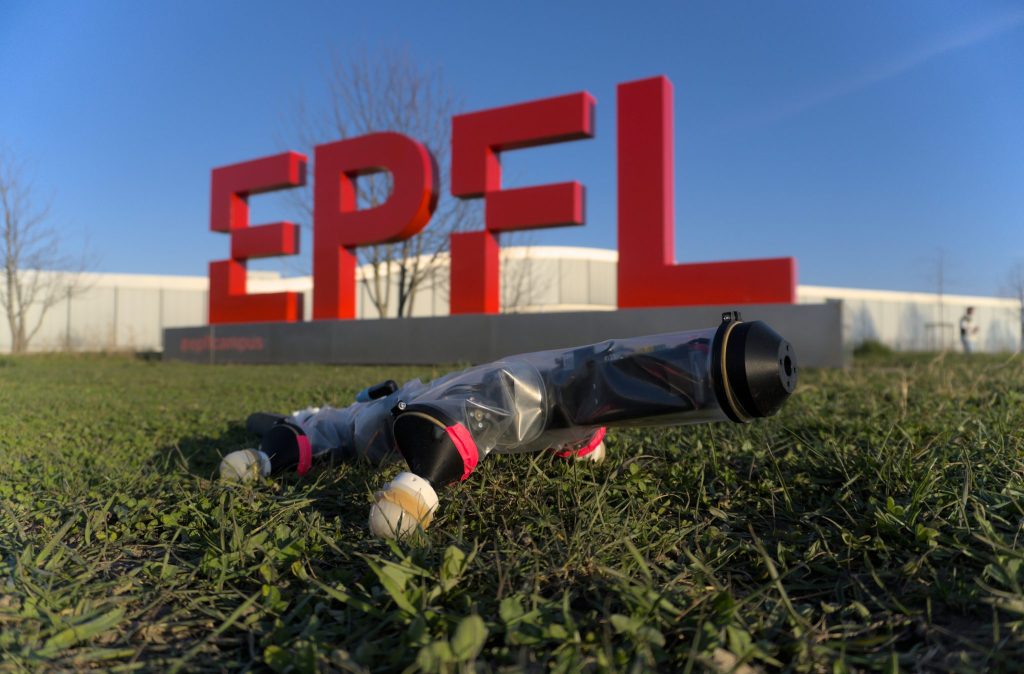
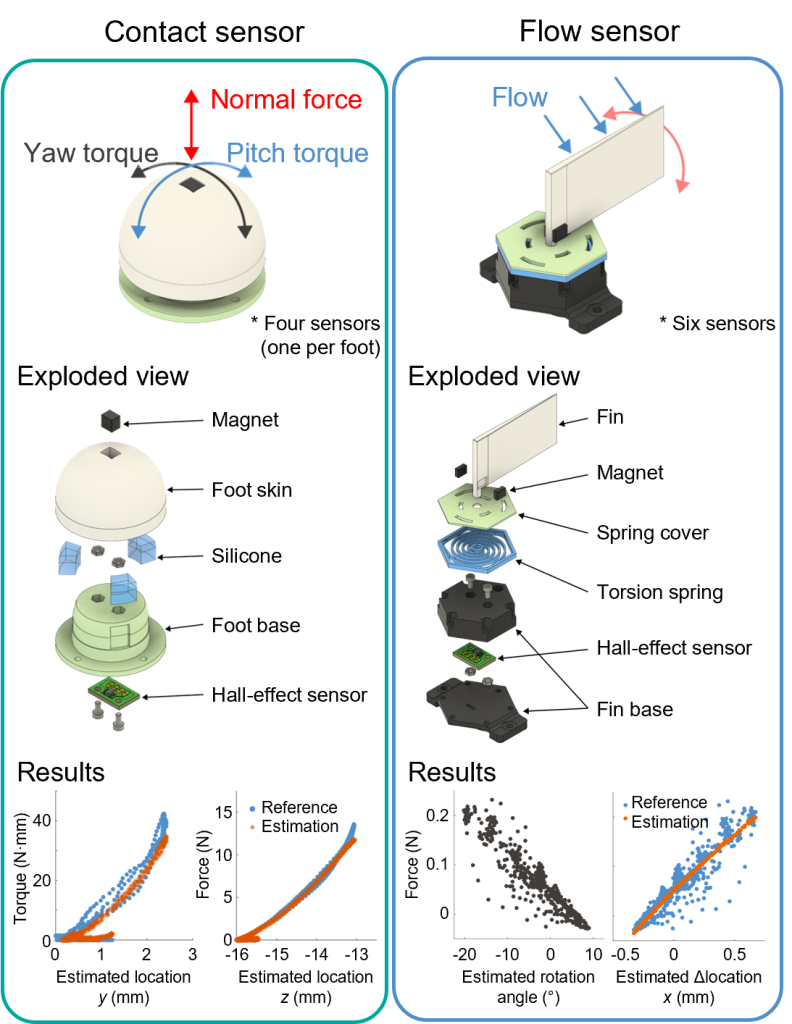
We present Polymander II, a salamander-inspired amphibious robot that uses Hall-effect sensors to sense foot contact forces and lateral hydrodynamic forces. The Hall-effect sensors used are compact, making them suitable for embedding in multiple positions within a robot, and exhibit high sensitivity to small forces. Moreover, because the sensor can be positioned separately from the measured object, waterproofing can be implemented with relative ease.
With two bus lines, the robot can simultaneously acquire this exteroceptive information at more than 500 Hz and proprioceptive information, such as joint positions and loads, at 100 Hz.
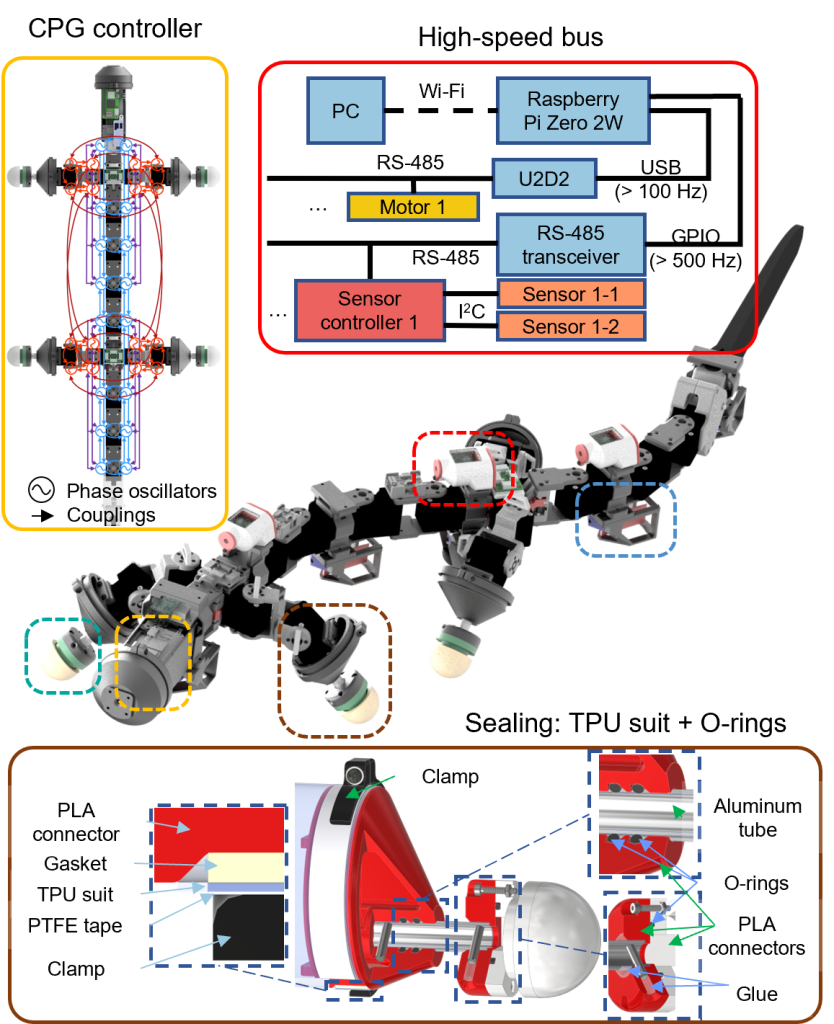
The robot is capable of traversing amphibious environments and using feedback control to facilitate tasks such as land-water transitioning.
Mechanical structure and assembly process
Walking, swimming, and walking-swimming transition
Publication: (Accepted) †Q. Fu, †S. Lee, A. Grillo, J. Arreguit, L. Gevers, J. Hughes, and A. Ijspeert, “Polymander II: an amphibious salamander-inspired robot with contact and flow sensors,” in 2026 IEEE International Conference on Robotics and Automation (ICRA), Vienna, Austria: IEEE, Jun. 2026. (†Equal contributions) Available: https://arxiv.org/abs/2605.24465
Polymander: a reconfigurable robot to emulate different morphological configurations
We introduce Polymander, a reconfigurable robot designed to emulate different morphological configurations. It consists of modular body segments, including a head, girdle, axial modules, and a tail module. The girdle supports two attachable limbs, each made out of a leg module and a foot module ending in a silicone ball-shaped foot.
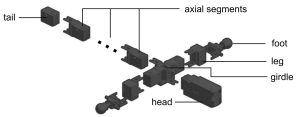
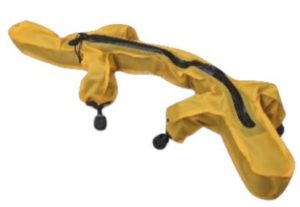
The name Polymander reflects its ability to mimic the body plans of both the bipedal fish Polypterus and the quadrupedal salamander. It additionally has a flexible waterproof suit for swimming experiments.
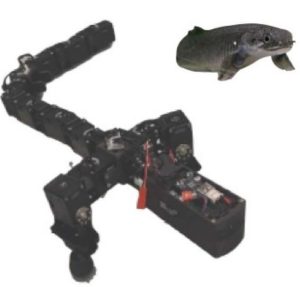
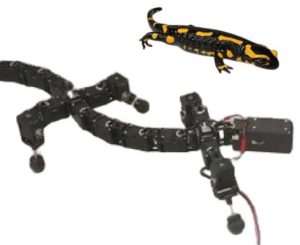
Using a CPG-driven controller, we optimize locomotion patterns via multi-objective optimization in simulation, comparing resulting Pareto fronts across different morphological configurations. Our results reveal that (1) mudskipper-like crutching is better suited for short bodies, while Polypterus-like walking is better suited for longer bodies; (2) symmetric anterior-to-posterior motion of the limbs is optimal for crutching, while increased anterior limb movement benefits Polypterus-like walking; and (3) sufficient limb strength is necessary for crutching but less so for walking, where axial bending mitigates its effects. Overall, our findings provide a potential explanation of why Polypterus and mudskippers adopt their distinct gaits, emerging as optimal solutions for their morphology within the broader space of all possible gaits.
Publication: L. Gevers, A. Gupta, L. Paez, Q. Fu, E. Standen, and A. Ijspeert, “Investigating the effect of morphology on the terrestrial gaits of amphibious fish using a reconfigurable robot,” Bioinspir. Biomim., vol. 20, no. 4, p. 046002, Jun. 2025, doi: 10.1088/1748-3190/addc27.
This research is supported by the European Research Council under the Horizon 2020 research and innovation programme (SALAMANDRA project, Grant No. 951477).