
'We walked for miles, we chopped wood, we ate enormous lunches and we stayed warm.'
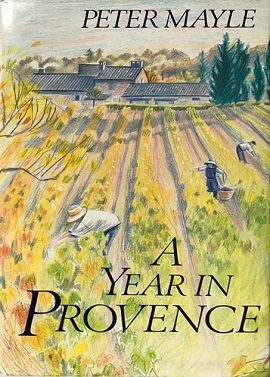
Could anything sound more appealing to those of us ripped away from break and planted in lecture seats? With A Year in Provence, his 1989 memoir about slow living in the south of France, Peter Mayle has this and many more ways to inspire envy in anyone with obligations. For the modern expat crowd, he mimics something akin to our fantasy, too.
Food is the thing. It soaks through the pages like dark gravy. I won’t give you a taste, else we’d both be stuck right here reading about marathon eating sessions beyond the “gastronomic frontiers of anything we [have] ever experienced.” For those of us who came to Switzerland from literally anywhere else, the pain of reading about dinners that send one home “oblivious to the cold, incapable of speech”, of reading about reasonable meat prices, of reading about how close we landed to greatness, is acute.
I suppose I should be grateful. At 27, Switzerland’s appalling food situation forced me into that mysterious place we call ‘kitchen’ at last. But if hassle is one of emigration’s great educational benefits, the difference between us and Mayle is that we’ve never had to wait for a check to clear. Technology has vastly reduced our struggle; we can check a Migros product for peanuts, buy a train ticket to Nyon, and pay our visitor’s tax without ever learning a lick of French. The primary struggle in today’s world is not to overcome barriers to assimilation. It is to actually face them. Books like A Year in Provence shine in how they showcase subtle ways an expat can grow if he or she would only lean in.
Of course, it is somehow the most frustrating barriers, the ones that ask you to “think in seasons instead of days or weeks,” that will always persist. If I didn’t know any better, I’d think “general contempt for punctuality” and “absolute refusal to use the telephone” referred to consulate workers rather than Mayle’s home contractors. These are the timeless headaches that lay siege to the expat’s mind, teaching little and piling up until he or she is stomping through the CE and CM buildings, losing their temper at an out-of-service Camipro machine, asking God why the rest of the world’s payment systems aren’t good enough for the Satellite. Too much of it and we risk turning into Mayle’s visiting cherry pickers, misanthropic critics of French beer, food, and scenery who are “determined to go back to Australia with no good memories of their time in Provence.” So, we develop a sense of humor about these things. We take it in stride. We embrace the slow climb to smooth living in a foreign land.
“Neighbours,” Mayle observes, “take on an importance in the country that they don’t begin to have in cities.” One wonders if their importance is measured in their usefulness for his account. His characters – for that is what they are – scare off German campers by illegally erecting signs (“Attention! Serpents!”) in a public forest, chip teeth on the buckshot that kills their meals, deliver “geophysical dissertations” while plastering ceilings flat on their back like “‘that Italian’” who painted the Sistine Chapel. They are packaged as cute bundles of quirk. Unflappable, lab-grown vectors of rustic charm.
In its own way, EPFL has us performing the same trick. Studying alongside so many other nationalities, we often find the elemental aspects of our former lives receiving uncommon attention (you grew up with popcorn that was sweet rather than salty? Fascinating!), thrusting us into position as the endearing rural neighbor to one another. Pretty soon we’re asking individuals to speak for their country rather than themselves if we aren’t careful. Mayle, for example, stages his neighbors’ “gun mania” as “only part of a national fascination with outfits and accouterments, a passion for looking like an expert.” He slaps this insight on all of the French not long after a section highlighting differences between Parisians and Provençals, and he does so without flinching.
Indeed, let us hope we have a fuller interest in each other than he seems to have in his characters. Vaucluse Department’s high suicide rate apparently becomes “more than a statistic” to Mayle when a man living two miles away hangs himself. Except two miles is a short skip in the country, and in a book chock full of larger-than-life neighbors, the total lack of any characterization for this sorry soul doesn’t suggest ‘more than a statistic’. It suggests a rush to avoid the sort of off-putting traits that humanize in order to maintain his memoir’s pleasant tone. In fact, the only unfortunate personalities he is quick to portray belong to fellow foreigners, like the tourist who quit Mayle’s lawn “puffing with Swiss indignation… leaving deep wheel marks in the grass.” Only outsiders can poison the heaven that is his myth.
Not that the reader would ever be lumped in with the dreaded outsider. “We were learning what it was like to live more or less permanently with guests,” says Mayle, who introduces very few individuals from this permanent fixture. When he does, it is a caricature like Marignane, who barely makes it off the airplane before relieving himself on a fire he started in his own rental car. Nobody is absurd enough to relate to Marignane (I hope). Nobody is dull enough to reduce themselves to the nondescript guest. No, who can the wanderlust-prone reader be but the author, a fish out of water with a keen eye for detail.
And herein lies the true appeal of A Year in Provence, a memoir whose author conceals himself as much as possible. We all agree that no self-respecting adult shies away from busting a move; why, I previously wondered, did Mayle say nothing of his own behavior on the “seething” and “frenzied” dance floor, where “elbows were cocked, heads flicked from side to side, desperate and off-balance charges were made with twinkling feet”? When you realize he’s inviting us to fill his shoes, you understand he’d rather not step on our toes. A Year in Provence is not a memoir. Not really. It is a rendition of the life readers imagine for themselves.
This is why the book sold enough units to push up local property prices and even send a few adoring fans to Mayle’s doorstep. It is why he sketches out the basics of truffle hunting, flea markets, boules, goat racing, and even la bise, that custom foreign (or perhaps only Anglo?) men fear most. He’s doling out itinerary suggestions for the bookish and burnt out, the sleepless ghosts haunting the service sector and dreaming of the day they can stand among the “subdued and smart” feeling “vaguely uncomfortable,” the day a fairy godmother will reward eight months of heavy eating and palatable socializing by leaving them “turned into bumpkins,” free from the stress of work, of study, of civilized society. It may be a fantasy Mayle’s selling, but it isn’t exactly a lie. It’s a feeling. His Provence, his characters, they do exist, only not on planet earth. They exist where the true depth of a place and its people may never be fully revealed even if a vibrant lens on the surface is offered in return. They exist in the mind of the expat.