
EDAR – Architecture et sciences de la ville
About the program
EDAR comprises more than 30 laboratories primarily affiliated with the Institute of Architecture, but also with the Institutes of Civil Engineering, Environmental Engineering, Physics, Computer and Communication Sciences. EDAR fosters collaborations with institutions both in Switzerland (such as ETHZ, AAM Mendrisio, HEAD Geneva) and internationally (Universities of Venice, Paris, Lille, Brussels, Ghent, Turin, and Harvard among others).
By adopting a polytechnic approach, EDAR fosters comprehensive research on the built environment through interdisciplinarity and dialogue between basic and applied research. This encourages a reflective, socio-technical perspective encompassing fundamental, design-oriented and practical research to drive innovative exploration.
The curriculum englobes EDAR’s three research areas: Sciences of the City; History, Theory, and Heritage; Research in/by Design. The EDAR Course Book features all courses offered by the doctoral program, including the mandatory courses that establish a common theoretical and methodological foundation for all students. Additionally, Les Rencontres de l’EDAR – the program’s annual event open to the public and faculty – allows to exchange on scientifically relevant themes. All ongoing and future activities are announced in the EDAR’s monthly newsletter.
Applying to EDAR
Applications can be submitted three times a year.
Deadlines: January 15, April 30, and September 15.
- Check out How to apply to EDAR for specific information.
- Be aware that only complete applications are reviewed (= with 3 letters of recommendation).
- Learn about the requirements and conditions of the doctoral program.
For further information on the EDOC admission criteria and application procedures visit the webpage.


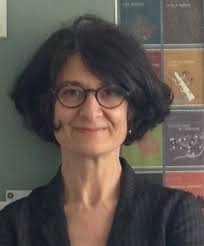
Within the broad field of study defined by architecture and sciences of the city, EDAR theses articulate in an innovative way both theoretical and practical, qualitative and quantitative, analytical and prospective approaches, taking advantage of the potential of discursive, visual and numerical languages. This methodological creativity is one of the forms taken by the interdisciplinarity that characterizes the EDAR program, and sets an objective of excellence.


Within EDAR, interdisciplinarity operates in direct dialogue with my research agenda, bringing together urban, historical, theoretical and anthropological perspectives that proved essential to build my academic approach and teaching style. My doctoral project on company towns and the politics of space matured in this intellectually generous setting, where collective exchange shaped my microhistorical method and deepened my analysis of socio-ecological transitions.

For applicants
Further information: how to apply, program details, testimonials
For PhD candidates
Practical information: what you need to know as an EDAR PhD student

People
Who is who: all you need to know about the EDAR community

Upcoming public defenses and EDAR events
EDAR News and Events provides a complete overview of past and upcoming events of the doctoral program.

Contact
Program Director
Prof. Elena Cogato Lanza
Program Administrator
Sandra Bottà
EPFL EDAR program
BP 2130
CH-1015 Lausanne
Phone +41 21 693 2191
[email protected]