
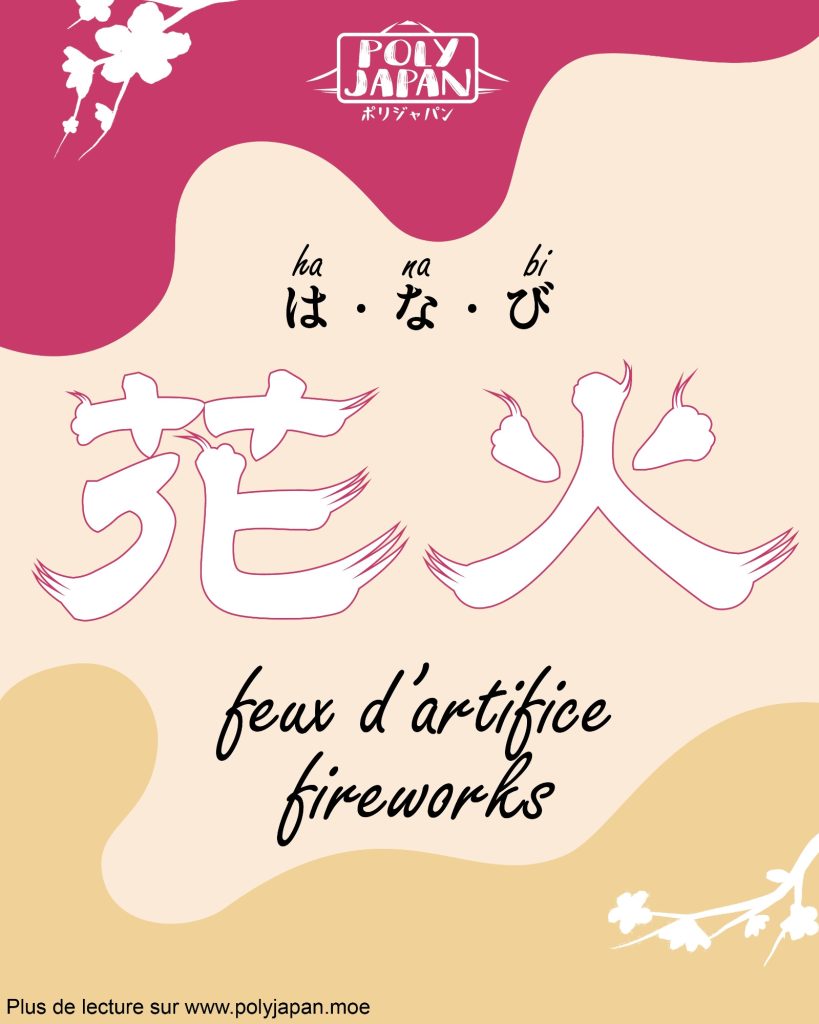
Ce soir la fête nationale suisse remplira le ciel de fleurs de feu : 花火 (hanabi) !
Le premier kanji correspond aux fleurs (hana), que l’on retrouve dans 花見 (hanami, à ne pas confondre !) : le jour où l’on va admirer (見 , mi signifie voir) les fleurs de cerisier !
Le second est très commun, utilisé par exemple pour dire mardi : le jour de Mars ou du feu 火曜日 (kayoobi) ; ou dans beaucoup de noms de plats : viande grillée, alcool fort… Comme les feux de joie (takibi en japonais, on reconnaît le “-bi” de hanabi) qui complètent les feux d’artifice aujourd’hui !
Tonight, Swiss National Day will fill the sky with fireworks: 花火 (hanabi)!
The first kanji corresponds to flowers (hana), which is found in 花見 (hanami, not to be confused!): the day when people go to admire (見, mi means to see) the cherry blossoms!
The second is very common, used for example to say Tuesday: the day of Mars or fire 火曜日 (kayoobi); or in many names of dishes: grilled meat, strong alcohol… Like the bonfires (takibi in Japanese, we recognise the ‘-bi’ from hanabi) complementing the fireworks today!
今日はスイスの建国記念日です!1291年、最初の3つの州が協定を結び、スイス連邦の始まりを告げました。8月1日は19世紀末から祝われるようになり、当初は一度きりの行事として計画されていました。
ランタン行列、キャンプファイア、美味しい食事、そして花火が各地で予定されています!