
Current open projects at SENSE
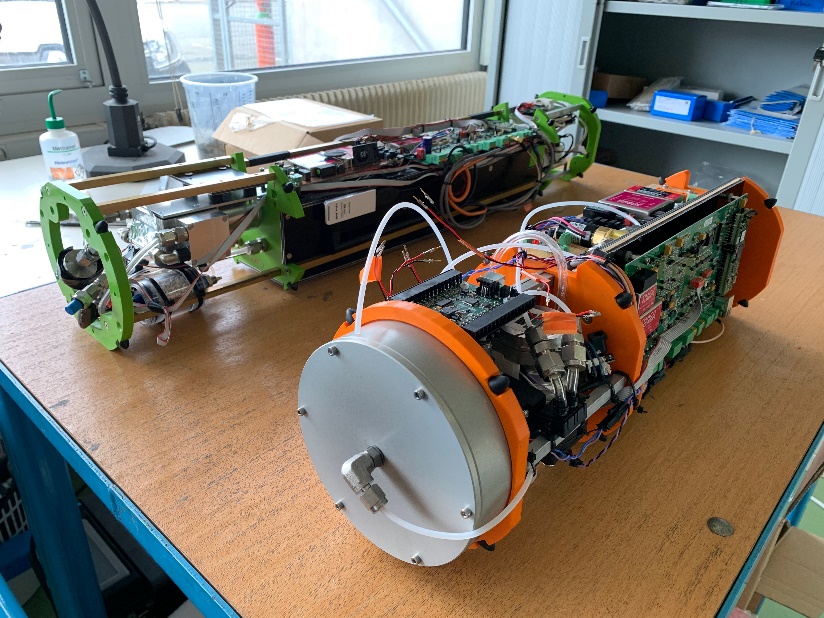
Laser spectrometer for in-situ measurements of dissolved gases in water. The separation membrane is located in the housing in front of the instrument.
Student projects
Master’s project in chemistry/chemical engineering
Project advisers:
Kumar Agrawal
Associate Professor, GAZNAT Chair of Advanced Separations
Jérôme Chappellaz
Full Professor, Ferring Pharmaceuticals Margaretha Kamprad Chair in environmental sciences
Context:
Measuring dissolved greenhouse gases in aquatic environment constitutes an important contribution to better understand their biogeochemistry and to evaluate their fluxes at the interface between sediments and water or between water and the atmosphere. A classical technique for quantifying dissolved gases consists in sampling water at different depths using dedicated bottles (called Niskin), followed by off-line measurements in the laboratory. But the results are strongly limited by the lack of detailed spatial and temporal resolution of the sampling technique.
Over the last decade, important technological efforts were conducted to develop in-situ instruments, able to characterize the dissolved concentration of greenhouse gases in real time and at high resolution in water. One of the project advisers, Jérôme Chappellaz, developed such an instrument with his team in France. It relies on optical-feedback cavity-enhanced absorption spectroscopy coupled to membrane extraction of the gases from water. The new technology was used over the last years to notably document with high spatial and temporal resolution the amount of dissolved methane in environments such as (1) the Mediterranean Sea as test-bed for the technology, (2) the Arctic ocean where methane degassing from the seabed is of major concern, (2) Lake Kivu in Rwanda where large
amounts of dissolved methane exist in bottom waters, (3) the Black Sea and (4) an alpine lake in France.
So far, this technology uses commercial membranes made of polydimethylsiloxane polymer or PDMS, for extracting dissolved gases from water and for feeding the embedded laser spectrometer in the probe. At EPFL, the team of Prof. Agrawal has developed atomic-thick graphene membranes with high but selective gas flux which is interesting for characterizing transport for selective permeation of gases (e.g., CH4, N2O, and NH3) with respect to other dissolved gases (N2, O2, CO2, Ar).
The mid-term aim of the two project advisers is to develop custom membranes allowing to enrich or deplete specific permeated gases, depending on the application. But as a first step, they propose here
to characterize the physical properties and permeance of existing PDMS membranes as a benchmark and compare this to the performance from porous graphene membranes.
Proposed work:
Membrane coupons will be built according to the protocol established by a former PhD student of the LAS research unit of EPFL.
Permeation coefficients will be determined for N2O, NH3 and H2O, through a sequence of measurements using dry gas mixtures and similar mixtures produced in a pressurized water tank.
The possible effects of temperature and salinity will also be quantified.
Contact :
Prof. Jérôme Chappellaz, EPFL, Sion (Switzerland) : [email protected]
Prof. Kumar Agrawal, EPFL, Sion (Switzerland) : [email protected]
Master’s project in Computational Sciences and Engineering
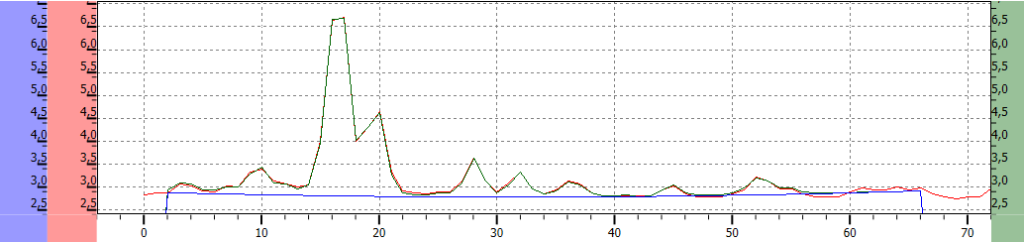
The goal of this master project is to develop a reproducible, documented Python code that uses the HITRAN molecular spectroscopic database to identify and rank ideal spectral regions (wavelength/wavenumber windows) for the detection of target molecules and for measuring isotopic ratios. The code will compute synthetic absorption spectra under configurable atmospheric or laboratory conditions, quantify signal-to-interference metrics, and output ranked candidate windows with diagnostics (line lists, expected absorption strengths, interference assessment, temperature/pressure sensitivity, and suggested instrumentation requirements).
This tool will support development of optical gas sensors for environmental and geoscience applications, with particular focus on greenhouse gas monitoring and source/sink attribution.
Background and motivation
HITRAN is the community standard spectroscopic database used to simulate molecular absorption spectra. Selecting the best spectral regions for detecting trace gases or measuring isotopic ratios requires considering line strengths, pressure–temperature dependence, overlap with interfering species, instrument resolution, and atmospheric transmittance. A robust automated toolkit will accelerate instrument design, reduce trial-and-error, and provide objective, reproducible choices for spectral windows.
Scientific and technical objectives
- Implement code to read and process HITRAN entries (line-by-line) and generate synthetic spectra for user-defined conditions (pressure, temperature, concentration, instrument line shape / resolution).
- Define quantitative metrics to assess suitability of spectral windows for (a) species detection and (b) isotopic ratio retrieval (e.g. line-integrated absorbance, uniqueness, interference index, S/N ratio, sensitivity to temperature/pressure, isotopologue separability).
- Search the selected spectral range(s) and produce ranked candidate windows for specified targets and constraints (e.g. wavelength region, maximum allowed interfering absorption, instrument resolution limits).
- Provide visualization and a compact report for each candidate window: expected molecules (target + interferers), spectral window, expected SNR, required optical pathlength and resolution.
- Validate the tool with a few cases already studied by human selection (e.g. 13CO2/12CO2 isotopic ratio, dD, d18O and d17O of H2O, or simultaneous CH4, CO2, N2O detection).
Litterature
- The HITRAN database: https://hitran.iao.ru/, https://hitran.org/
- Axel Wohleber, Camille Blouzon, Julien Witwicky, Patrick Ginot, Nicolas Jourdain, Roberto Grilli. A membrane inlet laser spectrometer for in situ measurement of triple water isotopologues. Limnology and Oceanography: Methods, 2025, 23 (1), pp.26-38. ⟨1002/lom3.10660⟩. ⟨hal-04945497⟩
- Loic Lechevallier, Roberto Grilli, Erik Kerstel, Daniele Romanini, Jérôme Chappellaz. Simultaneous detection of C2H6, CH4, and δ13 C-CH4 using optical feedback cavity-enhanced absorption spectroscopy in the mid-infrared region: towards application for dissolved gas measurements. Atmospheric Measurement Techniques, 2019, 12 (6), pp.3101-3109. ⟨5194/amt-12-3101-2019⟩. ⟨hal-02271447⟩
- Bereiter, B., Tuzson, B., Scheidegger, P., Kupferschmid, A., Looser, H., Mächler, L., Baggenstos, D., Schmitt, J., Fischer, H., and Emmenegger, L.: High-precision laser spectrometer for multiple greenhouse gas analysis in 1 mL air from ice core samples, Atmos. Meas. Tech., 13, 6391–6406, https://doi.org/10.5194/amt-13-6391-2020, 2020.
Contact
Prof. Jérôme Chappellaz, EPFL, Sion (Switzerland) : [email protected]
Dr. Roberto Grilli, IGE, Saint Martin D’Hères (France) : [email protected]