Practical information
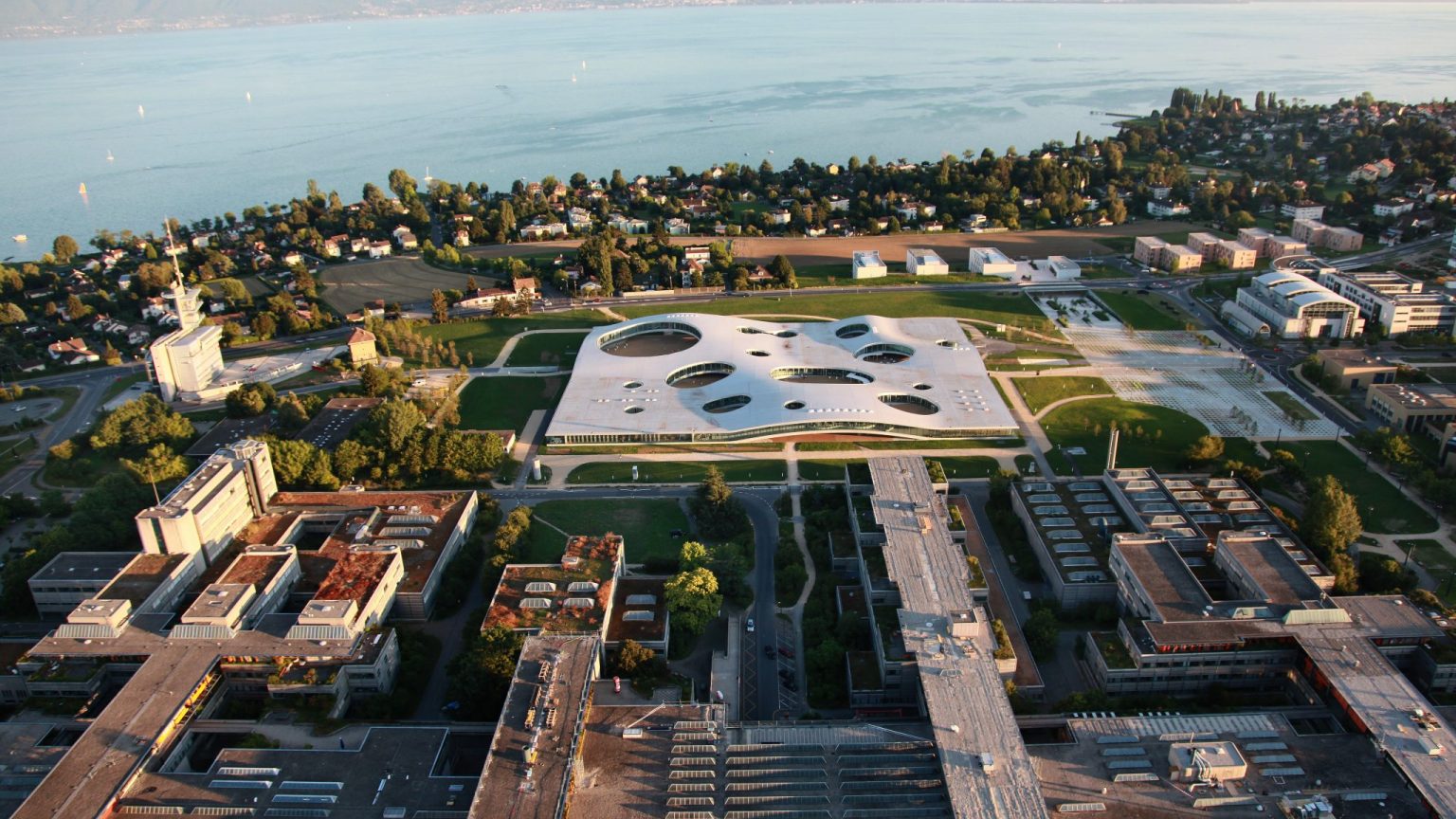
The EPFL Lausanne Campus
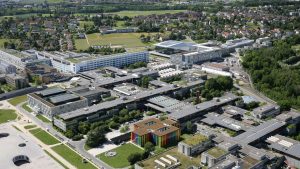
EPFL’s main campus is located in the commune of Ecublens in the heart of the Lausanne-Morges agglomeration, at the crossroads of several major road and rail routes. Access to the campus is guaranteed by a dense network of active mobility facilities, an efficient public transport network and excellent road connections.
You can find a campus map for easy navigation.
Detailed information about accessibility on the EPFL campus in Lausanne is available here.
Travel information

Lausanne, is easily accessible by various means of transportation. It is well connected by road via the A1/E25 and A9/E27 motorways, by rail through the CFF network with EC Direct and TGV services from Paris and Milan, by air with Geneva International Airport just 60 km away (approximately 45 minutes by car or train), and even by water, thanks to the Compagnie Générale de Navigation boats operating on Leman Lake.
The city’s prime location places it near several renowned tourist destinations, including Montreux and the Château de Chillon, Zermatt and the Matterhorn, the Jungfrau region, Lucerne, the historic town of Gruyères, the Glacier des Diablerets, the Vaudois Alps, and the popular French resort of Chamonix.
The two closest major airports to Lausanne are Geneva Airport (Aéroport de Genève) and Zurich Airport (Flughafen Zürich), both offering a range of international and domestic flights:
-
Geneva Airport (Aéroport de Genève): Situated approximately 60 kilometers (37 miles) west of Lausanne, it is the nearest major international airport. Geneva Airport provides excellent connections to global destinations, with frequent train and bus services to Lausanne. The train journey takes around 45 minutes.
-
Zurich Airport (Flughafen Zürich): Located about 220 kilometers (137 miles) northeast of Lausanne, Zurich Airport is another key international hub. Although farther than Geneva, it remains a practical option for travelers. The train journey to Lausanne typically takes 2.5 to 3 hours, with convenient connections.
Once in Switzerland, you can easily plan your train and transit connections on the SBB website.
Additional details on campus accessibility can be found on our official website.
Accommodation

Lausanne’s hotel sector is offering a diverse range of accommodations to suit every type of stay—from youth hostels to luxury palaces, with boutique hotels, bed & breakfasts, guest rooms, and campsites filling the gaps in between.
The complete list of available accommodations in Lausanne and its surroundings can be found on the Lausanne Tourism website.
For other options close to EPFL, here are three recommendations:
- SwissTech Hotel
Located directly on the EPFL campus, ensuring maximum convenience. - Discovery Hotel
A comfortable mid-range option in Crissier, about a 10-minute bus ride from EPFL. - Starling Hotel Lausanne
A premium, modern hotel situated near campus in Saint-Sulpice, offering upscale amenities. - Zleep Hotel
A brand-new hotel, offering cool simplicity combined with the highest quality
About Lausanne
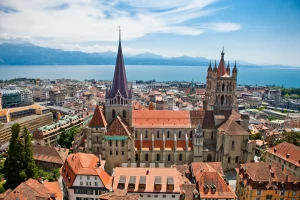
Located in Vaud Canton, Lausanne is a city that effortlessly blends natural beauty with cultural richness. Nestled on the northern shores of Leman Lake, its wide embankments invite visitors to stroll along the water’s edge while taking in the breathtaking Alpine views. The city’s hillside location offers stunning vistas of the lake from nearly every corner, creating a constant sense of openness and connection to nature.
Lausanne is a place of ‘joie de vivre’, where each neighborhood reveals a unique character. The charming Old Town is home to the iconic Notre-Dame Cathedral, a masterpiece of Gothic architecture that stands proudly above the city. Narrow cobbled streets, lined with cafes and boutiques, weave their way through this historic center. In contrast, the Flon district showcases modern urban design, bustling with contemporary bars, shops, and cultural spaces.
The city is also known as the Olympic Capital, hosting the Olympic Museum, which celebrates the spirit of global sportsmanship and offers interactive exhibits and lush gardens overlooking the lake. Green spaces abound in Lausanne, from the terraced Mon-Repos Park to the lakeside Ouchy promenade, providing locals and visitors with ample places to relax and enjoy the outdoors.
A unique feature of Lausanne is its metro system. The metro’s steep climbs reflect the city’s distinctive topography, making it both a practical and iconic aspect of urban life. Whether you’re ascending from the lakeside in Ouchy or navigating the vibrant city center, public transport here is as efficient as it is scenic.
For the latest events and highlights in Lausanne, including exhibitions, activities, and things not to be missed, you can explore the city’s offerings through Lausanne Tourism’s website, or Switzerland Tourism’s website.
Public Transportation
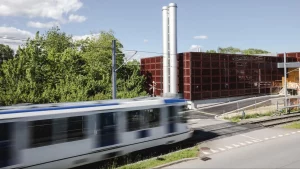
The city is served by a very dense network of public transport, continuously developed and upgraded.
The public transportation network of the metropolitan area is primarily managed by the tl (Transports publics de la région lausannoise). It includes buses, the m1 and m2 metro lines, as well as the LEB train, which connects the Gros-de-Vaud region to the center of Lausanne.
The websites of these companies allow you to view their services, network maps, and schedules. Lausanne’s CFF train station is the largest railway hub in French-speaking Switzerland. Located in the heart of the city, it provides an ideal connection to urban public transportation and soft mobility pathways.
The western part of the city is connected to the Vaud RER network through the Prilly-Malley station.
If you are staying in a hotel, ask for the Lausanne Transport Card, which entitles you to use public transport for free during your stay. Late at night or early in the morning, make use of the taxibus, cheaper than normal taxis.
We strongly encourage all participants to use public transportation, to reach the venue.
To get to the EPFL Campus, use the Metro M1 either from Renens train station or Lausanne-Flon and get off at the stop “EPFL”. Metros run every 5-10 minutes.
Check out timetables here.
Miscellaneous

- The official currency used in Switzerland is the Swiss Franc (CHF). We advise you to carry a small amount of cash.
- The voltage in Switzerland, as in most of Europe, is 230V/50 Hz. Switzerland uses type C (2-pin) and Type J (3-pin) plugs. (Type C 2-pin plugs also fit J sockets.) Most power sockets are designed for three pin round plugs. The standard continental type plug with two round pins, applied for many electrical travel products, may be used. We recommend having a travel adapter for Swiss plugs.
- Lausanne follows Central European Time (CET) defined as the standard time of Central Europe, always one hour ahead of UTC.
- Smoking is strictly prohibited at all times at the venue during all meetings and sessions and in the exhibition halls.
- By successfully completing the summer school, PhD students can be awarded 1 ECTS credit point.
- The official language of the Summer School is English.