
by Beatrice Lugli
On May 5th, the SPAN hosted a guest lecture on Geopolitical Challenges of the Energy Transition. The event brought together Mr. Bruno Le Maire, former French Minister for the Economy and Finance (2017–2024) and current lecturer at EPFL, UNIL, and IMD, and Professor Evelyna Trutnevyte, Head of the Renewable Energy Systems Group at the University of Geneva.
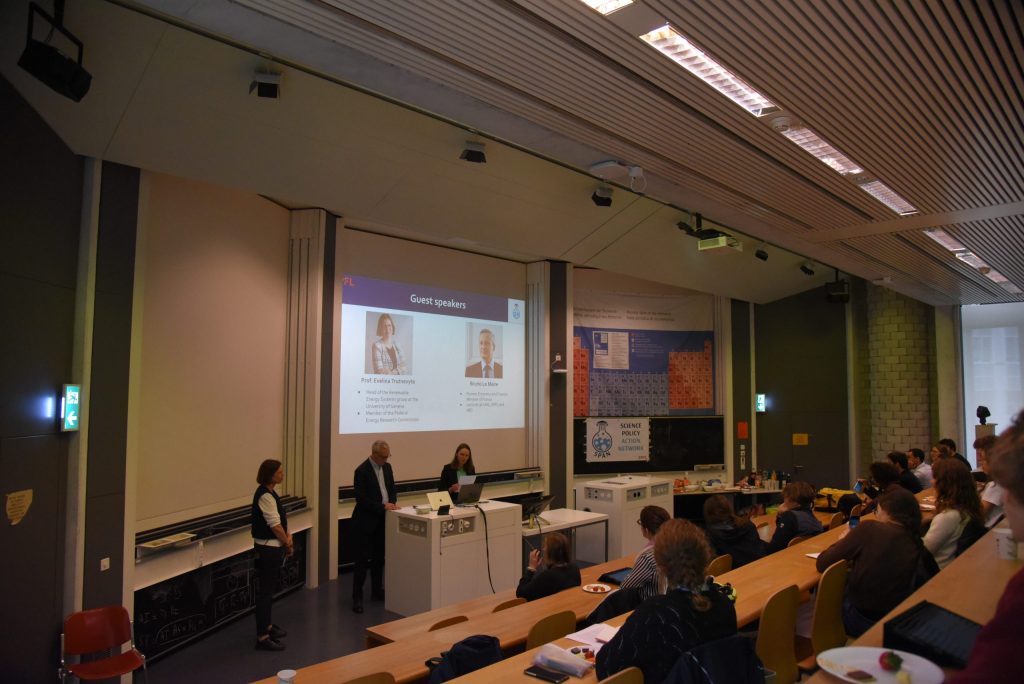
Opening the Discussion: Framing the Transition
The event began with remarks from Mr. Le Maire, who discussed the geopolitical, socioeconomic, and industrial challenges associated with the ecological transition (i.e., shifting from fossil fuels to sustainable energy sources). His address was followed by Professor Trutnevyte, who provided a technical overview of the energy transition’s complexities from a systems and modeling perspective.
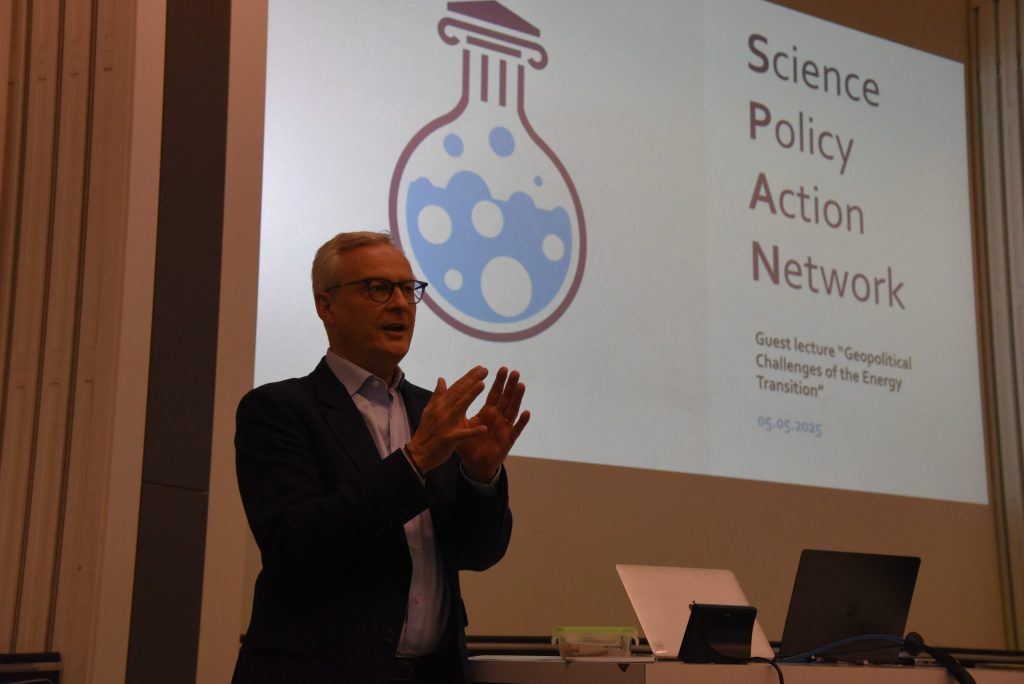
Mr. Le Maire on Europe’s Strategic Priorities
Mr. Le Maire’s speech was organized around two core themes: the independence of Europe in a multipolar energy world and the need for innovation and inclusive communication in tackling climate change.
1. Strategic Independence in Energy and Resources
Le Maire argued that Europe must reduce its dependency on superpowers such as China and Russia, particularly for energy resources (e.g., oil and gas) and raw materials critical for technologies like electric vehicles (e.g., lithium for batteries). He emphasized the importance of defining a national strategy where countries choose which sectors they aim to be self-reliant in and which ones can rely on international trade.
For example, Germany’s efforts to build a domestic supply chain for electric vehicle batteries revealed how essential access to raw materials is to achieve autonomy—yet also how difficult true independence may be.
He added that in some high-tech sectors, such as chip manufacturing, Europe is unlikely to catch up with long-standing leaders like the U.S. and Taiwan. Instead, strategic cooperation and trade agreements must ensure resource security.
2. Innovation and Risk-Taking
Le Maire stressed that Europe is falling behind in the technological revolution due to risk aversion and regulatory constraints. He called for more investment in innovation and stronger ties between policymakers and academic institutions.
As an example, he cited China’s public investment in its electric vehicle industry, which demonstrates the importance of coordinated government support. He encouraged European politicians to embrace a more proactive approach and become familiar with developments in AI and other transformative technologies.
Addressing Climate Change: Communication and Equity
1. Public Engagement and Fairness
When addressing climate change, Le Maire insisted on the need for a simplified, relatable narrative that empowers individuals to understand and act.
However, he also warned that climate measures should not unfairly burden low-income populations. As a cautionary example, he mentioned the gilets jaunes movement in France, which emerged after rising fuel prices disproportionately affected working-class citizens. He also criticized the design of low-emission zones that penalize people who cannot afford new and/or electric vehicles.
Moreover, Le Maire proposed that a more effective strategy to encourage sustainable practices is to incentivise them, rather than establishing punitive measures. An example he cited is Canada’s carbon tax credit, which rewards companies for making environmentally positive choices.
2. Industrial Decarbonization and Private Sector Involvement
In closing his remarks, Le Maire highlighted the importance of industrial decarbonization and investment in key sectors such as nuclear power to support energy demands while reducing emissions. He emphasized that governments should partner with companies that can be allies in the transition and that public-private collaboration is critical.
Q&A with Mr. Le Maire: Resources, Talent, and Political Will
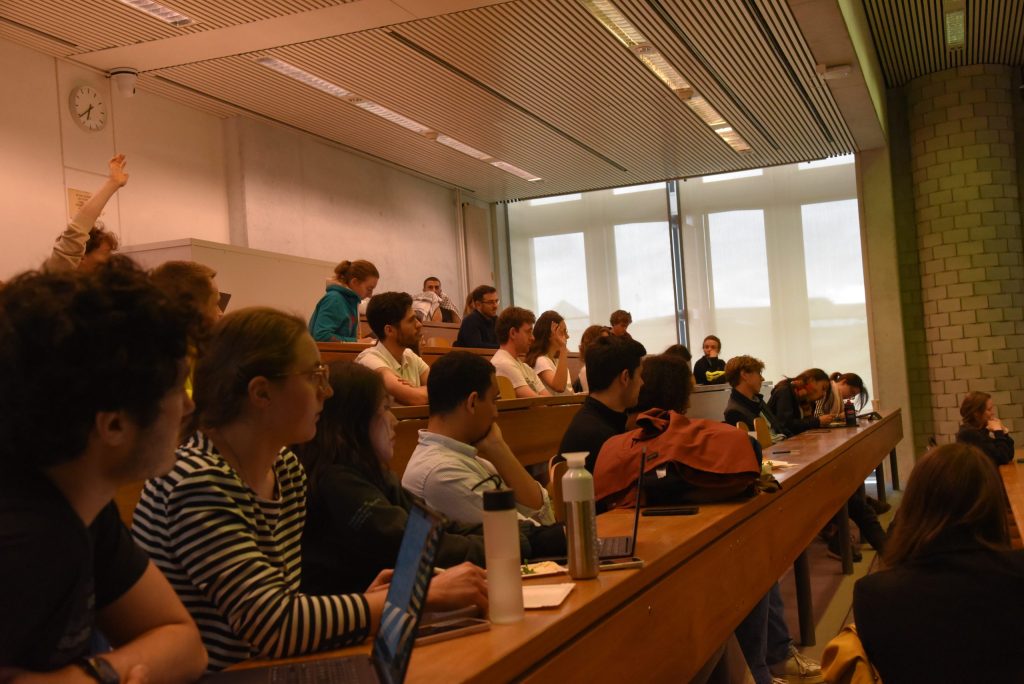
During the Q&A session, several important topics emerged:
- Minerals and Raw Materials: Le Maire acknowledged that during his mandate, the need for rare minerals (e.g., lithium) was not initially obvious, yet they are now recognized as key to Europe’s competitiveness in the green economy.
- Funding the Transition: While Europe has financial power, mobilizing it effectively—especially from private sources—is the real challenge. According to Le Maire, the transition cannot rely solely on public funds.
- Talent and Expertise: “When you have the best workers, you are the winner,” Le Maire remarked. Beyond money, talent is key and how a country engages with its expert workforce is essential for innovation. Le Maire indeed called for greater collaboration between policymakers and scientists, suggesting that Europe’s success hinges on decision-makers being informed and advised by experts.
- Education and Scientific Literacy: La Maire closed with a reflection on the declining scientific literacy among the general population, particularly the middle class. He agreed with a participant that government cuts to education and research weaken innovation potential and reiterated the importance of long-term investment, potentially through private-public partnerships.
Prof. Trutnevyte on the Technical and Geopolitical Complexity of the Transition
Following Mr. Le Maire, Professor Evelyna Trutnevyte presented a clear, accessible overview of the technical and systemic dimensions of the energy transition. As a PhD student outside of this field, I found her insights especially informative.
1. Decarbonizing Energy: Not All Sources Are Equal
She began by pointing out that fossil fuels, even when available, must be limited to meet the 1.5°C climate target. Transitioning to alternative energy sources is essential, but the ease of decarbonization varies. Electricity, for example, is more straightforward to clean than other energy carriers.
Hydrogen can be produced from water using renewable electricity, which offers a low-carbon option, but its production and storage nevertheless present challenges. This illustrated that the “ecological transition” is not a single path, but a landscape of shifting strategies depending on the energy type in question.
2. CO₂ Capture and Global Coordination
Prof. Trutnevyte also emphasized the role of carbon capture and storage (CCS) infrastructure, which raises geopolitical questions: Where will this infrastructure be built? Who will fund it? These issues reveal that technical solutions require international agreements and cooperation.
3. Unequal Distribution of Resources and Risks of New Exploitation
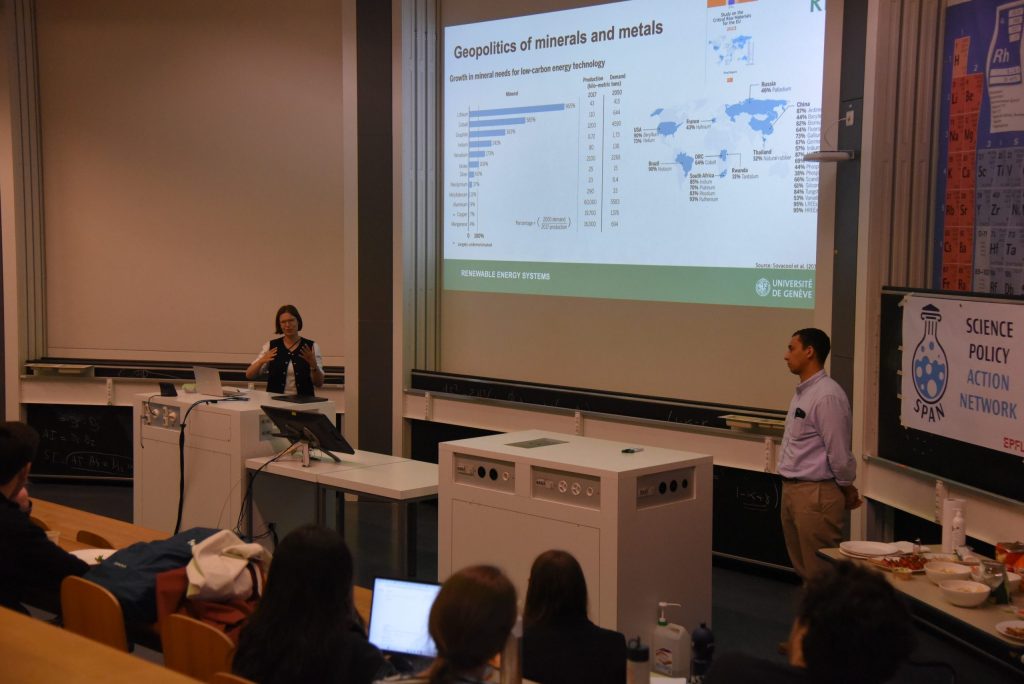
Another sobering point was the unequal global distribution of minerals required for low-carbon technologies. It made me realize that even in the context of the ecological transition—a fundamentally positive endeavor—there remains a real risk of exploitation. For example, melting ice in Greenland has made rare earth mining possible, raising ethical questions about resource extraction and environmental degradation.
Even more surprisingly to me, Prof. Trutnevyte noted that public access to data on resource availability is limited, even though such information may exists. This lack of transparency could hinder informed policy decisions.
4. Modeling Clean Energy Needs and Human Behavior
Prof. Trutnevyte also discussed the challenges of modeling future energy demand, which must consider not only technology but also human behavior and urban design. For instance, patterns of public transport use or heating needs in different countries dramatically affect projections.
5. Grid Design and Energy Sovereignty
Prof. Trutnevyte concluded with a discussion of the European grid system. Countries can opt for more centralized or decentralized energy grids, each with benefits and trade-offs. While centralization can improve efficiency and reduce costs, decentralization may better align with a nation’s desire for energy sovereignty. These decisions reflect broader political values and priorities and what may be more beneficial from an environment perspective may not reflect a country’s will.
6. Complexity of Science-Policy Collaboration
As a member of the Swiss Federal Energy Research Commission, Prof. Trutnevyte also offered insight into science-policy collaboration. She highlighted that advising decision-makers involves not just scientists, but also economists, lawyers, and other stakeholders with sometimes competing priorities.
Final Reflections
Although Mr. Le Maire and Professor Trutnevyte come from different backgrounds—political leadership and technical research, respectively—both emphasized the necessity of collaboration between science and policy. Their shared message was clear: the energy transition is not only a scientific and technical challenge, but a political, economic, and social one. And only through mutual understanding and cooperation we may succeed.